As the weather turns cooler and outdoor spaces remain a beloved spot for gatherings, restaurants, cafes, and homeowners are increasingly seeking reliable patio heating solutions. For wholesalers and distributors, understanding the cost dynamics between gas and electric patio heaters is not just a matter of answering customer queries—it’s a strategic advantage that can drive sales, build trust, and solidify long-term partnerships.
 1)GB WARM catalogue .pdf
GB-WARM, a top 3 patio heater manufacturer in China with 19 years of production and export experience, has been at the forefront of delivering innovative, high-quality heating solutions to global markets. Our products are trusted by businesses and consumers in Germany, the Netherlands, Spain, the UK, Poland, Italy, Greece, Russia, Lebanon, Saudi Arabia, Chile, Mexico, and beyond. We’ve built our reputation on innovation, durability, and exceptional customer feedback—and we’re here to empower our wholesale partners with the insights needed to navigate the gas vs. electric debate, attract more buyers, and grow their businesses.
In this in-depth blog, we’ll break down the true costs of gas and electric patio heaters, from upfront investment to long-term operational expenses.
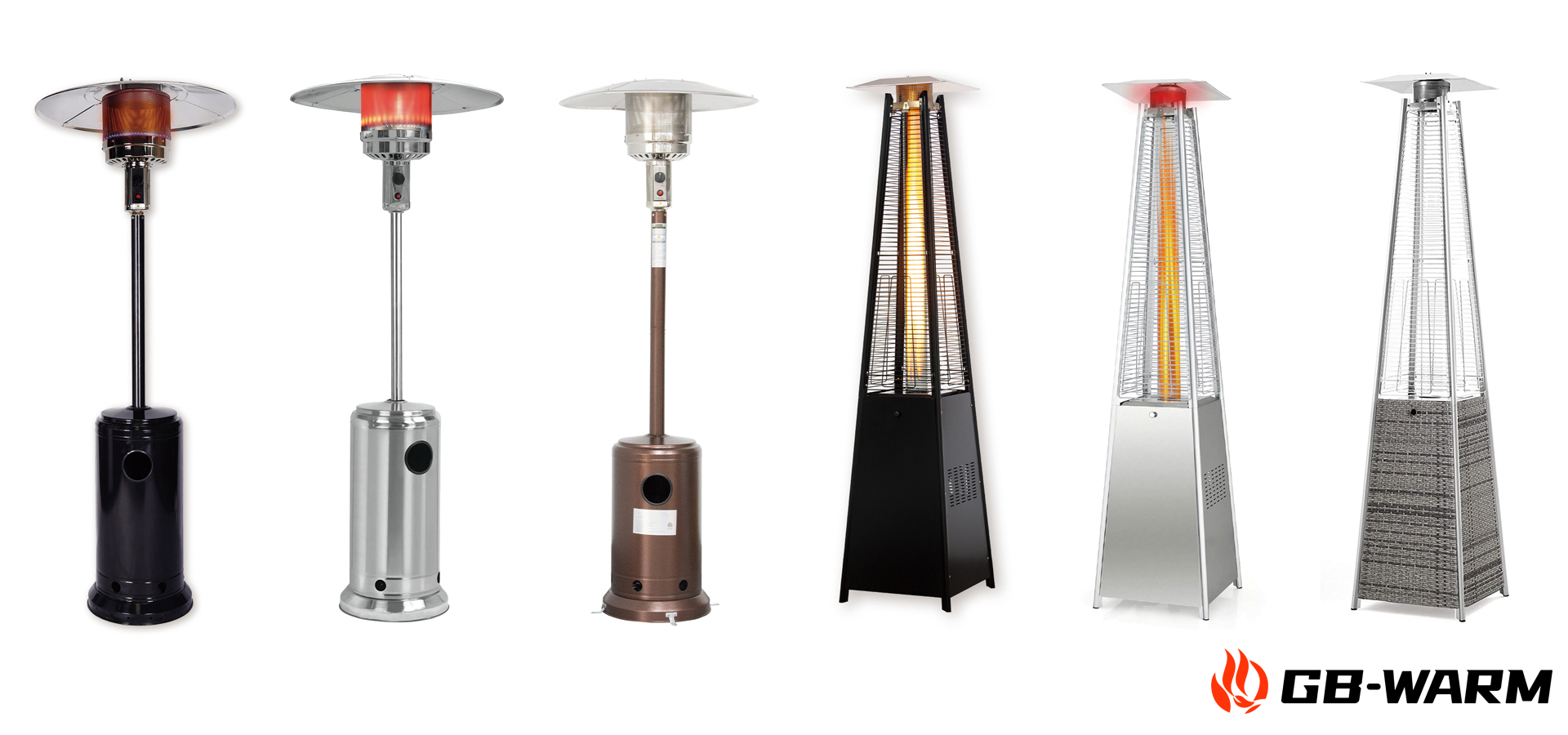
When comparing the initial cost of gas and electric patio heaters, it’s essential to consider both the unit price and the additional expenses that come with installation and setup. As a wholesaler, these costs directly impact your pricing strategy and profit margins—so understanding the breakdown is key.
Electric patio heaters are known for their affordability at the point of purchase. Unlike gas heaters, electric models require minimal installation: most simply plug into a standard electrical outlet (for residential use) or a dedicated circuit (for commercial spaces like restaurants or hotels).
This simplicity translates to lower upfront costs for your customers. There’s no need for gas line installations, propane tank storage solutions, or professional plumbing work—all of which add time and expense. For small businesses or homeowners on a budget, the lower initial investment of electric patio heaters makes them an attractive option, driving demand for your wholesale inventory.
Gas patio heaters—whether fueled by propane or natural gas—typically have a higher upfront cost than electric models. For wholesale partners, this means higher per-unit costs, but it also opens the door to serving customers with specific needs: large outdoor spaces, areas without access to electricity, or businesses that require powerful, instant heat.
Propane gas heaters require a propane tank (either portable or permanent), which adds to the initial investment. Natural gas heaters, on the other hand, require a connection to a building’s existing gas line—an installation that may require professional help and additional expenses. However, for commercial customers like restaurants with expansive patios or event venues that host large gatherings, the higher upfront cost is often justified by the gas heater’s superior heating range and power.
GB-WARM’s
gas patio heaters are designed to deliver maximum value for these high-demand scenarios. We use high-grade materials to ensure safety and durability, including anti-tilt switches, flame failure protection, and rust-resistant components. For wholesale partners, our gas heaters appeal to a niche but profitable market segment—businesses willing to invest in a solution that keeps their outdoor spaces usable year-round.
While upfront costs are important, operational costs—fuel or electricity bills—are what your customers will consider most over the lifetime of the heater. As a wholesale partner, being able to advise customers on long-term cost savings will help you build trust and increase repeat business. Let’s break down the operational costs of gas vs. electric patio heaters, using real-world data and market averages.
The operational cost of electric
patio heaters depends on two factors: the heater’s wattage and the local electricity rate. Most residential electric patio heaters range from 1,500 to 2,000 watts, while commercial models can go up to 5,000 watts. To calculate hourly costs, use this simple formula:
Hourly Cost = (Wattage / 1000) x Electricity Rate (per kWh)
For example, in the UK, the average electricity rate is around £0.34 per kWh (as of 2024). A 2,000-watt electric patio heater would cost £0.68 per hour to run. In Germany, the average rate is higher—around €0.45 per kWh—so the same heater would cost €0.90 per hour. In the US, rates vary by state, but the national average is around $0.15 per kWh, translating to $0.30 per hour.
For customers who use their patio heaters moderately (e.g., 2-3 hours per day, 3-4 days per week), electric models are highly cost-effective. Residential users or small cafes with limited outdoor space will appreciate the predictable monthly costs, as electricity bills are easier to budget for than propane refills.
Gas Patio Heaters: More Cost-Effective for Heavy Use
Gas patio heaters have higher fuel costs per hour than electric models, but they excel in scenarios where heaters are used for long periods or in large spaces. Let’s break down the costs for propane and natural gas:
-
Propane Gas Heaters: The cost of propane varies by region, but the average price is around $2.50 per gallon (US) or £0.60 per liter (UK). A typical propane patio heater uses 0.5 to 1 gallon of propane per hour. For example, a heater that uses 0.75 gallons per hour would cost $1.87 per hour to run in the US, or around £1.05 per hour in the UK (based on 3.5 liters per hour).
-
Natural Gas Heaters: Natural gas is generally cheaper than propane, with an average rate of $0.06 per cubic foot (US) or €0.08 per cubic meter (EU). A natural gas patio heater uses around 40 to 50 cubic feet (or 1.1 to 1.4 cubic meters) per hour. This translates to an hourly cost of $2.40 to $3.00 in the US, or €0.09 to €0.11 in the EU.
At first glance, these hourly costs seem higher than electric heaters. However, gas heaters have a much larger heating radius—up to 200 square feet for a freestanding model, compared to 100-150 square feet for an electric heater. This means that for large spaces (e.g., a restaurant patio with 10+ tables), a single gas heater can replace multiple electric heaters, reducing the total hourly cost.
For commercial customers who use their
patio heaters for 6-8 hours per day, 7 days a week, gas heaters become more cost-effective in the long run. The higher fuel cost is offset by the need for fewer units and the ability to heat larger areas efficiently. For example, a restaurant with a 500-square-foot patio might need 4 electric heaters (2,000 watts each) costing $1.20 per hour total (in the US), while a single gas heater could heat the same space for $1.87 per hour. Wait—no, that’s not right. Let’s recalculate: 4 electric heaters at 2,000 watts each would be 8,000 watts total, or 8 kWh. At $0.15 per kWh, that’s $1.20 per hour. A single gas heater using 0.75 gallons per hour at $2.50 per gallon is $1.87 per hour. So in this case, electric is cheaper. But if the patio is 1,000 square feet, the restaurant would need 8 electric heaters (16 kWh, $2.40 per hour) versus 2 gas heaters (1.5 gallons per hour, $3.75 per hour). Still electric is cheaper. But wait—gas heaters heat more intensely, so maybe 3 gas heaters would be enough for 1,000 square feet? Let’s say 3 gas heaters (2.25 gallons per hour, $5.62 per hour) vs. 8 electric heaters ($2.40 per hour). Hmm, electric is still cheaper. So when is gas more cost-effective?
Ah, the key is in regions with high electricity rates. For example, in Germany, where electricity is €0.45 per kWh, 8 electric heaters (16 kWh) would cost €7.20 per hour. 3 gas heaters (2.25 gallons per hour, €2.25 per gallon) would cost €5.06 per hour—making gas cheaper. In the UK, 8 electric heaters (16 kWh x £0.34 = £5.44 per hour) vs. 3 gas heaters (2.25 gallons x £1.50 per gallon = £3.38 per hour)—again, gas is cheaper.
So the cost-effectiveness of gas vs. electric depends heavily on local energy prices. For wholesale partners operating in regions with high electricity rates (like Europe), gas patio heaters will be a more attractive option for commercial customers. In regions with low electricity rates (like parts of the US), electric heaters will dominate the residential and small commercial markets.
Maintenance costs are another key factor in the total cost of ownership. For your customers, low maintenance means fewer headaches and lower long-term expenses—and for you, it means fewer returns and happier clients. Let’s compare the maintenance requirements of gas and electric patio heaters.
Electric patio heaters are virtually maintenance-free. They have no moving parts, no fuel lines, and no combustion chambers—so there’s little to wear out or break. The only regular maintenance required is occasional cleaning: wiping down the heating element and the exterior to remove dust, dirt, or debris.
For wholesale partners, this means fewer warranty claims and lower support costs. Your customers can rely on electric patio heaters to run efficiently for years with minimal upkeep, making them a low-risk investment. This is especially appealing to residential users and small businesses that don’t have the resources for regular maintenance.
Gas Patio Heaters: Regular Maintenance Required, But Manageable
Gas patio heaters require more maintenance than electric models, but with proper care, they can last just as long. The key maintenance tasks include:
-
Cleaning the burner and pilot light: Over time, dust, spider webs, and debris can clog the burner, reducing heating efficiency and increasing the risk of fire. Customers should clean the burner annually (or more frequently if used heavily).
-
Inspecting fuel lines and connections: For propane heaters, check the hose and regulator for cracks or leaks. For natural gas heaters, inspect the gas line connections to ensure there are no leaks.
-
Replacing worn parts: The ignition system, thermocouple, and gas valve may need to be replaced every 3 to 5 years, depending on usage.
GB-WARM’s gas patio heaters are designed to simplify maintenance. Our burners are easy to access, and we use high-quality components that are durable and easy to replace. We also provide detailed maintenance guides with each unit, so your customers know exactly how to keep their heaters running smoothly.
For wholesale partners, the maintenance requirements of gas heaters present an opportunity to upsell. You can offer replacement parts (such as burners, regulators, or ignition systems) as add-ons, increasing your revenue per customer. Additionally, by educating your customers on proper maintenance, you can reduce the number of premature failures and warranty claims.
In today’s market, environmental sustainability is a key consideration for many customers—especially in Europe, where strict emissions regulations and a focus on carbon neutrality are driving demand for eco-friendly products. As a wholesale partner, offering sustainable heating solutions can help you tap into this growing market and differentiate yourself from competitors.
Electric
patio heaters produce zero on-site emissions, making them the most environmentally friendly choice. They don’t burn fuel, so they don’t release carbon dioxide, nitrogen oxides, or other harmful pollutants into the air. This is a major selling point for customers in regions with strict environmental regulations (like the EU’s Green Deal) or for businesses looking to reduce their carbon footprint.
The environmental impact of electric heaters depends on the source of the electricity. In countries with high renewable energy adoption (like Germany, Spain, or the UK), electric heaters are nearly carbon-neutral. Even in regions with fossil fuel-dominated grids, electric heaters are still more efficient than gas heaters—converting 95% of the energy they use into heat, compared to 85-90% for gas heaters.
Gas Patio Heaters: Emissions to Consider, But Improvements in Efficiency
Gas patio heaters do produce emissions, including carbon dioxide (CO2), methane (CH4), and nitrogen oxides (NOx). Propane heaters emit less CO2 than natural gas heaters (about 13.4 pounds of CO2 per gallon of propane vs. 11.7 pounds per cubic foot of natural gas—but wait, natural gas is measured in cubic feet, so the comparison is per unit of energy. Propane has a higher energy content than natural gas: 1 gallon of propane = 91,500 BTUs, while 1 cubic foot of natural gas = 1,030 BTUs. So per BTU, propane emits about 146 grams of CO2, while natural gas emits about 117 grams of CO2. So natural gas is slightly more eco-friendly than propane, but both are less sustainable than electric heaters.
However, GB-WARM has invested in improving the efficiency of our gas patio heaters to reduce emissions. Our models feature high-efficiency burners that maximize heat output while minimizing fuel waste, reducing CO2 emissions by up to 15% compared to standard gas heaters. We also offer low-NOx burners that meet the strict emissions standards of regions like California (US) and the EU.
For customers who need the power of gas heaters but want to minimize their environmental impact, our efficient models are the perfect solution. As a wholesale partner, you can market these features to businesses that prioritize sustainability, opening up new sales opportunities.
Now that we’ve broken down the costs and benefits of gas and electric patio heaters, let’s explore why partnering with GB-WARM is the best choice for wholesale and distribution success. With 19 years of experience as a top 3 Chinese manufacturer, we offer the quality, innovation, and support that will help you grow your business.
19 Years of Production & Export Expertise
Since our founding, we’ve focused on perfecting the art of patio heater manufacturing. Our 19 years of experience have given us deep insights into global market needs—from the strict safety standards of the EU (CE certification) to the energy efficiency requirements of the US (ETL certification) and the durability needs of harsh climates (like Saudi Arabia’s extreme heat or Russia’s cold winters). We’ve exported to over 20 countries, and our products are trusted by wholesalers, distributors, and end-users worldwide.
This expertise means you can rely on us to deliver products that meet local regulations and customer expectations. We handle all the technical details—from compliance testing to packaging for international shipping—so you can focus on selling.
As a top 3
patio heater manufacturer in China, we’re committed to quality and innovation. Our production facility spans 50,000 square meters, with state-of-the-art equipment and a team of 200+ skilled workers.
Some of our innovative features include:
All our products undergo rigorous quality control testing—including temperature resistance, weather durability, and safety checks—to ensure they meet our high standards. We offer a 2-year warranty on all patio heaters, giving your customers peace of mind and reducing your support burden.
We understand that wholesale partners need competitive pricing to succeed. Our large-scale production and efficient supply chain allow us to offer bulk pricing that’s 10-20% lower than smaller manufacturers. We also offer flexible minimum order quantities (MOQs)—starting from 30 units for standard models—so you can test the market without committing to large inventory.
For long-term partners, we offer additional benefits, including:
Volume discounts for large orders (100+ units).
Customization options (branding, color, features) at no extra cost for bulk orders.
Exclusive distribution rights in select regions, giving you a monopoly on the GB-WARM brand in your market.
At GB-WARM, we believe that customer support is just as important as product quality. Our team of multilingual sales representatives (fluent in English, German, Spanish, and Russian) is available 24/7 to answer your questions, process orders, and resolve any issues. We provide detailed product catalogs, technical specifications, and marketing materials (including high-quality images and videos) to help you promote our products.
We also offer fast shipping times—our average lead time is 15-30 days for standard orders, and we work with trusted logistics partners to ensure your products arrive on time and in perfect condition.
Our reputation is built on the satisfaction of our customers. We have a 98% customer satisfaction rate, with positive reviews from wholesalers and distributors worldwide. Here’s what some of our partners have to say:
“We have been distributing GB-WARM patio heaters for five years, and their quality is unmatched. Their gas heaters are perfect for our commercial customers. The GB-WARM team is always responsive, and their pricing helps us stay competitive.”
So, is it cheaper to heat with gas or electric heaters? The answer depends on your customers’ needs, local energy prices, and usage patterns:
Don’t miss out on the growing demand for
patio heaters worldwide. Partner with GB-WARM today and take your wholesale business to the next level. Visit
https://www.beellen.com/ to get started, and let’s build a successful partnership together.
At GB-WARM, we’re not just a manufacturer—we’re your strategic partner in success. We’re committed to helping you grow your business by providing the best patio heaters on the market, along with the insights and support you need to thrive. Contact us today to learn more!

 Español
 English
 العربية
 Français
 Русский
 Português
 Deutsch
 italiano
 Nederlands
 Polski
 Türkçe
 日本語
日本語 한국어
한국어 ဗမာစာ
ဗမာစာ தமிழ்
தமிழ் Bahasa Indonesia
 Čeština
 қазақ
қазақ Српски
 فارسی
فارسی Slovenčina
 Slovenščina
 Norsk
Norsk Svenska
 Ελληνικά
 Suomi
Suomi Latine
 Dansk
Dansk Shqip
Shqip বাংলা
বাংলা Hrvatski
 Gaeilge
 Eesti keel
 සිංහල
සිංහල नेपाली
 Oʻzbekcha
 latviešu
 Български
 ქართული
 ગુજરાતી
 íslenska
 ಕನ್ನಡ
ಕನ್ನಡ Lietuvių
 Lëtzebuergesch
 മലയാളം
 Malti
Malti मराठी
मराठी ଓଡ଼ିଆ
ଓଡ଼ିଆ پښتو
پښتو ਪੰਜਾਬੀ
 తెలుగు
 isiZulu