Extending outdoor seasons is no longer a luxury — it’s a business necessity and a lifestyle upgrade. Whether you’re a homeowner wanting comfortable evenings on the patio or a restaurant owner looking to keep tables filled longer into fall and winter, a quality patio heater makes the difference between empty space and profitable, enjoyable outdoor living.
This guide answers the most common questions buyers ask when searching for patio heaters. We’ll cover types, fuel options, sizing, real operating costs, safety, installation, and commercial considerations so you can make a confident decision. At the end, we’ll also explain how working directly with a reliable manufacturer can save money and simplify bulk purchasing.
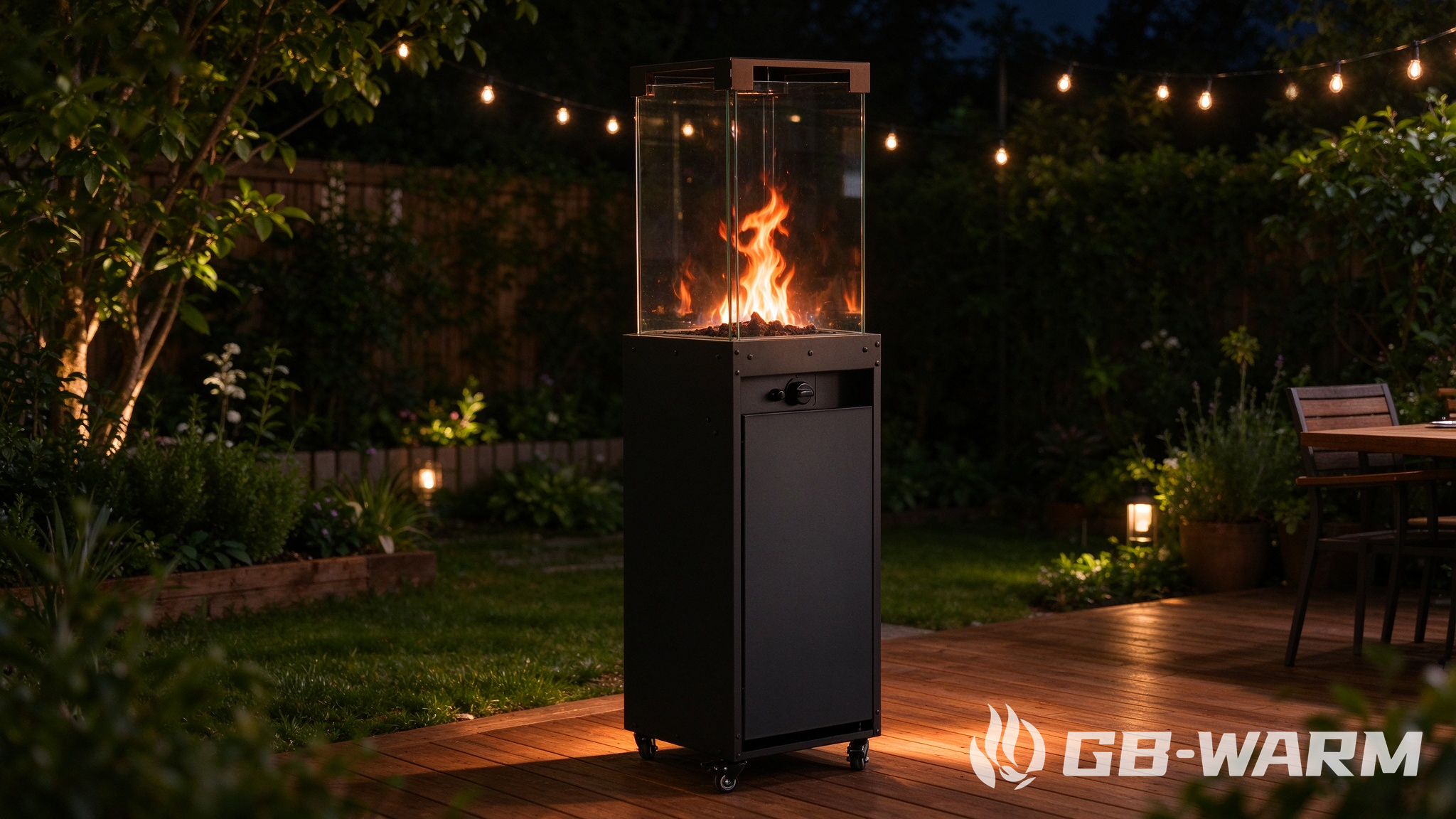
What Is a Patio Heater and How Does It Work?
Patio heaters are outdoor heating appliances designed to warm people and surfaces rather than the surrounding air. Most modern units use radiant (infrared) heat technology. Unlike forced-air heaters that warm the air (which quickly dissipates outdoors), radiant heaters emit infrared energy that is absorbed by objects, furniture, and people in their path. This makes them far more effective in open or semi-open outdoor environments.
Heat output is measured in BTUs (British Thermal Units) for gas models and watts for electric models. Higher numbers generally mean more heating power, but placement, wind protection, and mounting height often matter more than the raw number.
Types of Patio Heaters
Choosing the right style depends on your space, aesthetics, and whether you need portability or a permanent solution.
1. Freestanding (Tower / Mushroom) Heaters
These are the classic tall units with a large reflector on top. Most run on propane and deliver 40,000–50,000 BTU. They heat in a 360-degree pattern and are popular for residential patios and restaurants because they require no installation. Many include wheels for easy movement and a base that hides the propane tank.
2. Pyramid / Glass-Tube Heaters
These feature a visible flame inside a glass tube for strong visual appeal. Heat output is typically similar to standard freestanding models. They create ambiance but can be slightly less efficient in strong wind because the flame is more exposed.
3. Wall-Mounted and Ceiling-Mounted Heaters
Ideal for covered patios, pergolas, and commercial spaces where floor space is limited. Available in both gas and electric versions. Electric infrared models are especially popular here because they are clean, quiet, and easy to control with remotes or smart systems.
4. Tabletop Heaters
Compact units (usually 10,000–15,000 BTU or 1,500W electric) designed to sit on tables. Perfect for small balconies, intimate seating areas, or as supplemental heat.
5. Horizontal / Overhead Infrared Heaters
These are typically electric and mounted high on walls or ceilings. They direct heat downward in a focused pattern and work well in windy conditions because the heat is concentrated.
Fuel Types: Propane, Natural Gas, or Electric?
This is one of the most important decisions.
Propane Patio Heaters
Pros: Highest heat output, fully portable, no electrical connection needed
Cons: Requires tank refills, ongoing fuel cost, tanks take storage space
Best for: Open patios, temporary setups, locations without gas lines
A standard 20 lb propane tank typically lasts 8–12 hours on high and 15–20 hours on low with a 40,000–46,000 BTU heater.
Natural Gas Patio Heaters
Pros: Continuous fuel supply, lower long-term operating cost, no tank changes
Cons: Requires professional installation and a permanent gas line
Best for: Permanent residential installations and high-volume commercial use
Electric Patio Heaters (Infrared)
Pros: Clean, quiet, no emissions, easy installation (plug-in or hardwired), low maintenance
Cons: Lower maximum heat output than large gas units, higher electricity cost in some regions
Best for: Covered patios, balconies, enclosed or semi-enclosed spaces, locations where gas is restricted
Quick Comparison
Maximum heat: Propane / Natural Gas > Electric
Operating cost (approximate, varies by region): Natural Gas lowest → Electric mid → Propane highest
Installation ease: Electric easiest → Propane simple → Natural Gas most involved
Portability: Propane wins
How to Size a Patio Heater Correctly
Undersizing is one of the most common buyer mistakes.
Simple guidelines:
Small balcony or single table (under 100 sq ft): 10,000–15,000 BTU or 1,500W electric
Medium patio (150–300 sq ft): 40,000–48,000 BTU freestanding or multiple electric units
Large patio or restaurant seating (300+ sq ft): Multiple 40,000–50,000 BTU units or a combination of freestanding and overhead heaters
Rule of thumb for gas heaters:
Aim for roughly 20–40 BTUs per square foot of seating area, then increase the requirement if the space is very open or windy.
Wind dramatically reduces effective coverage. A heater rated for an 18-foot diameter may only feel comfortable within 8–10 feet on a breezy night. Using windbreaks, partially enclosed structures, or overhead heaters improves performance significantly.
Covered patios retain heat much better than fully open ones. One heater can often do the work of two in a well-protected space.
Real Operating Costs
Understanding running costs helps both homeowners and commercial buyers budget accurately.
Propane (40,000–46,000 BTU unit): Approximately $1.50–$2.50 per hour on high, depending on local propane prices
Natural Gas: Often $0.40–$0.80 per hour
Electric (1,500–3,000W infrared): $0.15–$0.60 per hour, depending on local electricity rates
Commercial operators who run heaters many hours per week almost always benefit from natural gas or high-efficiency electric systems over the long term.
Key Features Worth Paying For
When comparing models, prioritize these features:
Tip-over safety shutoff (standard on quality freestanding units)
Flame failure / oxygen depletion protection (gas models)
Adjustable heat settings
Weather-resistant construction (powder-coated steel or stainless steel)
Easy ignition (piezo or electronic)
Wheels and tank storage (freestanding propane models)
Remote control or smart compatibility (especially electric)
Proper clearances clearly listed in the manual
Cheap units often cut corners on materials and safety systems. For commercial use or heavy residential use, durability and parts availability matter more than the lowest price.
Safety and Installation Considerations
Patio heaters are safe when used correctly, but they require respect.
Never use gas patio heaters indoors or in fully enclosed spaces (carbon monoxide risk)
Maintain manufacturer-recommended clearances from walls, ceilings, and combustible materials
Secure freestanding units on level surfaces; many allow sand or water in the base for stability
Electric units should be plugged into GFCI-protected outlets when used outdoors
Professional installation is strongly recommended for natural gas and hardwired electric models
Regular maintenance (cleaning the burner, checking connections, inspecting the thermocouple) keeps units running reliably and safely for years.
Commercial vs Residential Needs
Restaurants, hotels, and event venues have different priorities than homeowners:
Higher duty cycles (many hours per day)
Need for consistent, reliable performance
Preference for natural gas or commercial-grade electric systems to control fuel costs
Aesthetic integration with outdoor design
Easy serviceability and spare parts availability
Commercial buyers should look for units with stronger construction, better warranties, and proven performance in high-use environments.
If you are a wholesaler, distributor, retailer, or commercial project buyer, buying finished units from retail channels is rarely the most efficient path. Working directly with a manufacturer offers clear advantages:
Better pricing at volume
Ability to customize finishes, branding, packaging, or specifications (OEM/ODM)
Consistent quality control
Reliable supply chain and lead times
Technical support and spare parts
GB-WARM is one of the Top 3 patio heater manufacturers in China. We specialize in producing freestanding propane outdoor heaters for both residential and commercial markets. Our products feature robust, durable construction and hold key safety certifications; we offer highly competitive wholesale pricing to global distributors and bulk buyers.
Whether you require standard models for retail or customized solutions for hospitality and dining projects, we support our partners through flexible order quantities, comprehensive quality certification documentation, and highly responsive service.
Final Buying Checklist
Before you purchase, answer these questions:
Is the space open, covered, or partially enclosed?
What is the size of the seating area (in square feet) that requires heating?
What is your top priority—maximum heating output, lowest operating costs, ease of installation, or aesthetic appeal?
For commercial use: How many hours per day or week will the heaters be in operation?
Conclusion
The right patio heater turns cold outdoor spaces into comfortable, profitable, and enjoyable environments. Focus first on matching the heater type and fuel source to your specific space and usage pattern. Pay attention to real-world coverage (not just marketing claims), safety features, and long-term operating costs.
For individual buyers, a well-chosen freestanding propane unit will deliver years of reliable performance. For wholesalers, distributors, and commercial projects, partnering directly with an experienced manufacturer removes middleman costs and opens the door to customization and volume pricing.
If you are looking for quality patio heaters at competitive wholesale prices, or if you need OEM support for your brand or project, GB-WARM is ready to help. Contact us to discuss bulk orders, product specifications, certifications, and partnership opportunities.
Stay warm, extend your season, and make outdoor spaces work harder for you.

 Español
 English
 العربية
 Français
 Русский
 Português
 Deutsch
 italiano
 Nederlands
 Polski
 Türkçe
 日本語
 한국어
 ဗမာစာ
 தமிழ்
 Bahasa Indonesia
 Čeština
 қазақ
 Српски
 فارسی
 Slovenčina
 Slovenščina
 Norsk
 Svenska
 Ελληνικά
 Suomi
 Latine
 Dansk
 Shqip
 বাংলা
 Hrvatski
 Gaeilge
 Eesti keel
 සිංහල
 नेपाली
 Oʻzbekcha
 latviešu
 Български
 ქართული
 ગુજરાતી
 íslenska
 ಕನ್ನಡ
 Lietuvių
 Lëtzebuergesch
 മലയാളം
 Malti
 मराठी
 ଓଡ଼ିଆ
 پښتو
 ਪੰਜਾਬੀ
 తెలుగు
 isiZulu