When you are planning a large outdoor hospitality, commercial, or residential project, choosing the right patio heater supplier is just as important as choosing the right product.
Buying one or two patio heaters for a private terrace is relatively simple. However, purchasing 50, 100, 500, or even more patio heaters for restaurants, hotels, resorts, cafés, outdoor event venues, apartment developments, or commercial projects requires much more careful planning.
You need to consider product quality, heating performance, fuel type, compliance, customization, packaging, delivery schedules, spare parts, and after-sales support. More importantly, you need a supplier that can consistently manufacture and deliver large quantities without compromising quality.
So, where should you buy bulk patio heaters for large projects?
This guide explains what to look for in a bulk patio heater supplier and how to choose the right manufacturing partner for your project.
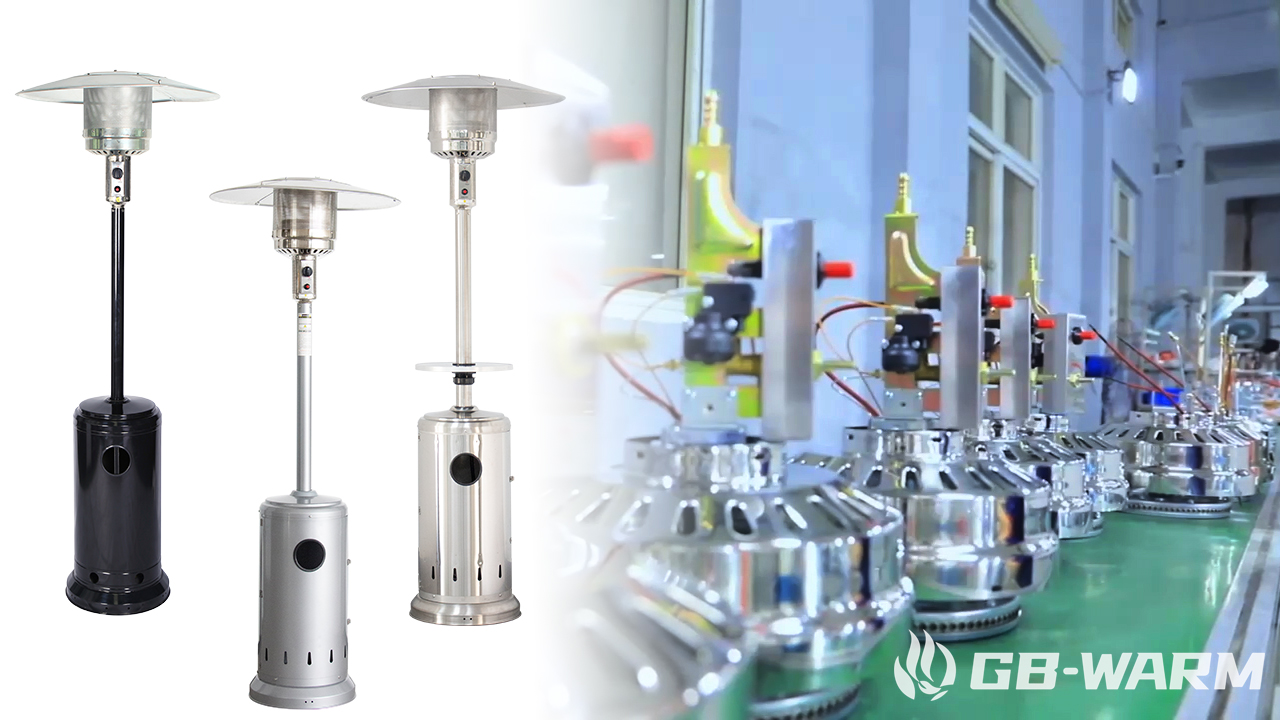
1. Why Buy Patio Heaters in Bulk?
Large outdoor projects often require dozens or hundreds of heating units.
For example, a restaurant group may need patio heaters for several locations. A hotel may need outdoor heating for its terrace, garden restaurant, poolside area, and smoking zone. A distributor may need to purchase a full container of patio heaters for the coming season.
Buying in bulk can provide several advantages.
Lower Unit Cost
Most manufacturers offer better pricing for larger quantities. When you purchase directly from a factory, you can also reduce the cost associated with multiple layers of distributors and wholesalers.
For large projects, even a small reduction in the unit price can result in significant savings.
Consistent Product Quality
Purchasing all heaters from the same manufacturer helps ensure consistency in:
Product design
Heating performance
Materials
Surface finish
Spare parts
Packaging
User instructions
This is particularly important when heaters are installed across multiple locations.
Easier Project Management
Working with one experienced manufacturer makes purchasing, production, inspection, packaging, shipping, and after-sales communication easier to manage.
Instead of coordinating with several suppliers, you have one primary manufacturing partner.
2. Where Can You Buy Bulk Patio Heaters?
There are several common sources for purchasing patio heaters in bulk.
Local Wholesalers
Local wholesalers can be convenient because they may have stock available and can provide relatively fast delivery.
However, wholesale prices are usually higher than factory-direct prices because the product has already passed through additional distribution channels.
Wholesalers may also have limited customization options.
Online B2B Marketplaces
B2B marketplaces provide access to many patio heater suppliers. They can be useful for comparing different products, prices, specifications, and suppliers.
However, buyers should carefully check whether a supplier is an actual manufacturer or a trading company.
For large projects, it is important to understand:
Where the product is manufactured
Factory production capacity
Quality control procedures
Export experience
Certifications
Customization capability
Production lead time
Direct From a Patio Heater Manufacturer
For large-volume projects, purchasing directly from a manufacturer can offer several advantages.
A professional manufacturer can usually provide:
Factory-direct pricing
OEM and ODM services
Product customization
Bulk production
Private labeling
Customized packaging
Spare parts
Technical support
Quality inspection
Export documentation
For this reason, factory-direct purchasing is often considered when the order quantity is large or when the project requires customized products.
3. What Type of Patio Heater Should You Buy?
Before contacting suppliers, you should determine what type of outdoor heater your project requires.
Different applications may require different heating technologies.
Gas Patio Heaters
Gas patio heaters are widely used in restaurants, cafés, hotels, bars, terraces, and outdoor hospitality areas.
Their advantages include:
They can be suitable for commercial environments where strong heating performance is required.
Electric Patio Heaters
Electric heaters are commonly used in balconies, enclosed terraces, restaurants, cafés, hotels, and other areas where electrical power is readily available.
They can provide convenient operation without fuel storage.
However, buyers should consider electrical capacity, installation requirements, operating costs, and local regulations before selecting this option.
Wood Pellet Patio Heaters
Wood pellet patio heaters have become increasingly interesting for outdoor hospitality applications.
They use compressed wood pellets as fuel and can provide both heat and an attractive flame effect.
For restaurants, cafés, hotels, resorts, and outdoor dining areas, pellet heaters can provide a different experience compared with conventional gas or electric heating.
When evaluating pellet patio heaters, buyers should check:
Pellet size requirements
Fuel consumption
Burning time
Heating output
Ignition method
Ash management
Safety design
Cleaning requirements
Spare parts availability
For projects where visual appearance is important, a pellet patio heater can also become part of the overall outdoor atmosphere.
4. What Should You Check Before Choosing a Bulk Supplier?
Price should not be the only consideration.
When purchasing hundreds of patio heaters, the supplier's manufacturing capability can have a major impact on your project.
Manufacturing Capacity
Ask the supplier how many units they can produce per month.
A supplier may provide an attractive quotation, but if they cannot manufacture your required quantity within your project schedule, the low price will not solve the problem.
Ask questions such as:
What is your monthly production capacity?
What is the normal lead time?
Can you handle repeat orders?
Can you support container-level orders?
What happens if additional units are required?
A supplier with stable production capacity is generally easier to work with on large projects.
Quality Control
Bulk orders require consistent quality.
Ask whether the manufacturer has dedicated QC procedures covering:
Incoming materials
Welding
Assembly
Functional testing
Surface finishing
Packaging
Final inspection
For commercial projects, quality problems can become expensive because replacing dozens of defective units after installation may involve additional transportation and labor costs.
5. Compliance and Certifications
If you are purchasing patio heaters for the European market, compliance should be considered from the beginning of the project.
Depending on the product type and destination market, relevant requirements may include product safety, gas or electrical regulations, chemical requirements, packaging requirements, labeling, documentation, and environmental obligations.
Do not simply ask a supplier:
"Do you have CE?"
Instead, ask for the relevant technical documentation and determine whether the specific model meets the requirements for your target market.
For European buyers, it is also important to understand responsibilities related to regulations such as GPSR, packaging requirements, and EPR obligations, depending on the product and supply-chain arrangement.
A professional manufacturer should be able to discuss the applicable compliance requirements and provide the appropriate documentation for the product being supplied.
6. OEM and Custom Patio Heaters for Large Projects
Large projects do not always want standard products.
For example, a hotel chain may want its logo on the product. A restaurant group may require a specific color to match its brand identity. A distributor may want exclusive product designs.
This is where OEM and ODM services become valuable.
A manufacturer may be able to provide:
Before starting customization, confirm the supplier's MOQ and development requirements.
Some changes are relatively simple, while structural modifications may require tooling, engineering work, prototypes, and additional testing.
7. Packaging Is Especially Important for Bulk Orders
When purchasing patio heaters in large quantities, packaging should not be overlooked.
Outdoor heaters are relatively large products, and transportation can expose them to vibration, impact, moisture, and stacking pressure.
Ask the manufacturer about:
Efficient packaging can also improve container utilization.
For international buyers, reducing the amount of unused space inside a container can have a meaningful impact on logistics costs.
8. Ask About Spare Parts Before Placing the Order
A professional commercial heater supplier should be able to support spare parts after the initial purchase.
For a large installation, even a small number of replacement components may be necessary during long-term operation.
Depending on the heater, spare parts may include:
Ignition components
Burners
Glass tubes
Wheels
Control components
Handles
Grilles
Fasteners
Fuel-related components
Electrical components
Before signing the purchase agreement, ask how spare parts can be ordered and how long they will remain available.
This is particularly important for hotels, restaurant groups, distributors, and other customers who expect to use the equipment for many years.
9. How to Compare Patio Heater Suppliers
Instead of comparing suppliers only by unit price, create a complete purchasing comparison.
A useful comparison table can include:
| Factor | What to Check |
| Product | Heater type and specifications |
| MOQ | Minimum order quantity |
| Price | EXW / FOB / CIF price |
| Capacity | Monthly production capability |
| Lead Time | Production and delivery schedule |
| Materials | Stainless steel, steel, aluminum, etc. |
| Certification | Applicable market compliance |
| Customization | OEM / ODM options |
| Packaging | Carton and pallet specifications |
| Spare Parts | Availability and pricing |
| Warranty | Warranty terms |
| After-Sales | Technical and service support |
| Export Experience | Experience in your target market |
This approach gives buyers a more complete picture of the supplier's capabilities.
10. Why Work Directly With an Experienced Factory?
For large projects, the relationship between buyer and manufacturer can be more important than simply finding the lowest quotation.
An experienced factory understands that commercial projects involve deadlines, specifications, documentation, inspections, packaging requirements, and long-term service.
A reliable manufacturing partner should be able to support the project from product selection through mass production and delivery.
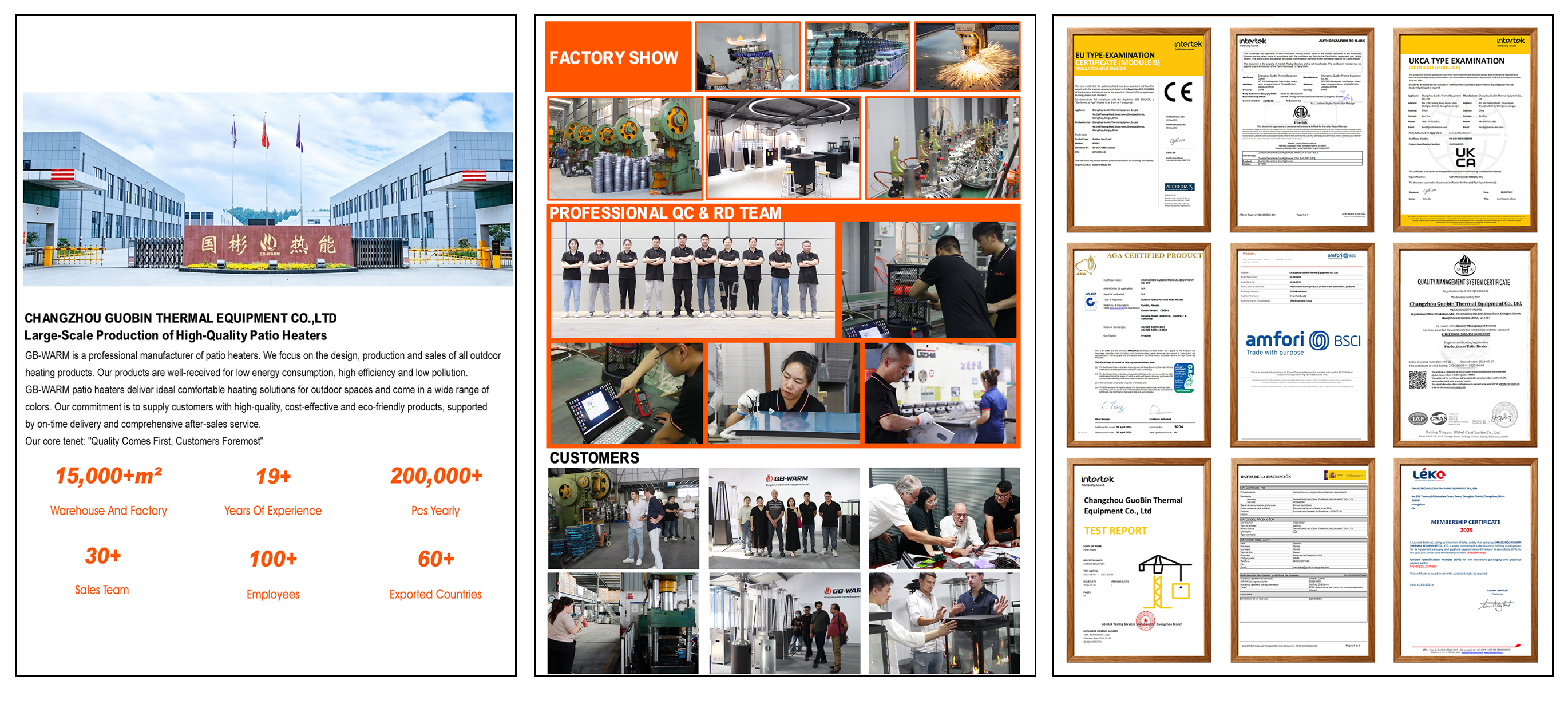
For example, Changzhou Guobin Thermal Equipment Co., Ltd. specializes in outdoor heating products, including patio heaters, pellet heaters, stoves, and related components.
The company operates a manufacturing facility in Jiangsu, China, with production capabilities including pipe shrinking, precision punching, CNC bending, robotic welding, assembly, and quality inspection.
For buyers looking for bulk outdoor heating solutions, working directly with a manufacturer can provide a more direct communication channel from product development to mass production.
11. Questions to Ask a Patio Heater Manufacturer
Before placing a large order, consider asking the following questions:
1. Are you a manufacturer or trading company?
If you are working on a large project, knowing who actually manufactures the product is important.
2. What is your monthly production capacity?
This helps determine whether the supplier can support your project volume.
3. What is the MOQ?
MOQ can vary depending on the product and customization requirements.
4. Can you provide OEM or ODM services?
This is important if you need branding or product modifications.
5. What certifications and technical documents are available?
Make sure the documentation corresponds to the actual model you intend to purchase.
6. What is the production lead time?
Ask for the lead time based on your actual order quantity rather than a standard sample order.
7. Can you provide spare parts?
Long-term spare-part availability is important for commercial installations.
8. How do you control quality during mass production?
Ask about inspection procedures and final testing.
9. Can you provide samples before mass production?
For large projects, approving a sample before production can reduce the risk of costly problems later.
10. Can you provide customized packaging?
This is especially useful for distributors and branded projects.
12. How to Get the Right Bulk Patio Heater Quote
When requesting a quotation, provide as much project information as possible.
Instead of sending:
"Please quote 100 patio heaters."
A better RFQ could include:
Product type
Quantity
Fuel type
Target market
Required certifications
Product color
Logo requirements
Packaging requirements
Delivery destination
Required delivery date
Spare parts requirements
OEM/ODM requirements
The more information you provide, the more accurate the quotation is likely to be.
For container orders, you can also ask the supplier to provide the estimated carton dimensions, loading quantity, gross weight, and net weight.
This information can help your logistics team calculate the total landed cost.
Buying patio heaters for a large project is very different from buying a single unit.
The right supplier needs to offer more than an attractive price. You should evaluate manufacturing capacity, product quality, compliance, customization capability, packaging, lead time, spare parts, and after-sales support.
For restaurants, cafés, hotels, resorts, commercial developments, outdoor event venues, and distributors, purchasing directly from an experienced patio heater manufacturer can provide a more efficient way to manage large-volume orders.
Before placing your order, request samples, confirm specifications, review the relevant documentation, discuss production schedules, and make sure both sides clearly understand the project requirements.
Whether you need 50 patio heaters for a restaurant project or several hundred units for a hotel or distribution program, selecting a capable manufacturing partner at the beginning can make the entire procurement process much easier.
If you are looking for bulk patio heaters, commercial outdoor heaters, wood pellet patio heaters, OEM patio heaters, or customized outdoor heating solutions, working directly with an experienced manufacturer can be a practical starting point.
For large projects, the goal is not simply to find a supplier who can sell you patio heaters.
The goal is to find a manufacturing partner who can produce the right products, in the right quantity, with consistent quality, on schedule, and with the documentation and support your project requires.

 Español
 English
 العربية
 Français
 Русский
 Português
 Deutsch
 italiano
 Nederlands
 Polski
 Türkçe
 日本語
日本語 한국어
한국어 ဗမာစာ
ဗမာစာ தமிழ்
தமிழ் Bahasa Indonesia
 Čeština
 қазақ
қазақ Српски
 فارسی
فارسی Slovenčina
 Slovenščina
 Norsk
Norsk Svenska
 Ελληνικά
 Suomi
Suomi Latine
 Dansk
Dansk Shqip
Shqip বাংলা
বাংলা Hrvatski
 Gaeilge
 Eesti keel
 සිංහල
සිංහල नेपाली
 Oʻzbekcha
 latviešu
 Български
 ქართული
 ગુજરાતી
 íslenska
 ಕನ್ನಡ
ಕನ್ನಡ Lietuvių
 Lëtzebuergesch
 മലയാളം
 Malti
Malti मराठी
मराठी ଓଡ଼ିଆ
ଓଡ଼ିଆ پښتو
پښتو ਪੰਜਾਬੀ
 తెలుగు
 isiZulu


![Outdoor Glass Tube Patio Heater - [Propane], [11KW], for Backyard, Garden & Commercial Use - CZGB-D1-11KW | GB-WARM](http://iororwxhjlkmlq5p.ldycdn.com/cloud/plBpoKqklpSRqlinijqnip/zhutu-640-640.png)