As Europe accelerates its march toward carbon neutrality and consumers increasingly prioritize eco-conscious choices in every aspect of life, outdoor living spaces have become a focal point of sustainable innovation. Patios, gardens, and terraces are no longer just extensions of homes—they are venues for socializing, relaxing, and connecting with nature, even as temperatures drop. For years, gas and electric patio heaters have dominated the market, but their environmental footprint and long-term cost implications are driving a shift toward greener alternatives. Enter pellet-fueled patio heaters: a game-changing solution that marries warmth, efficiency, and sustainability, backed by advances in technology and growing alignment with European renewable energy policies. As a top 3 Chinese manufacturer of patio heaters with 19 years of production and export experience, GB-WARM has witnessed and led this transformation, bringing innovative,driven (reputation-backed) pellet heaters to markets across Europe.
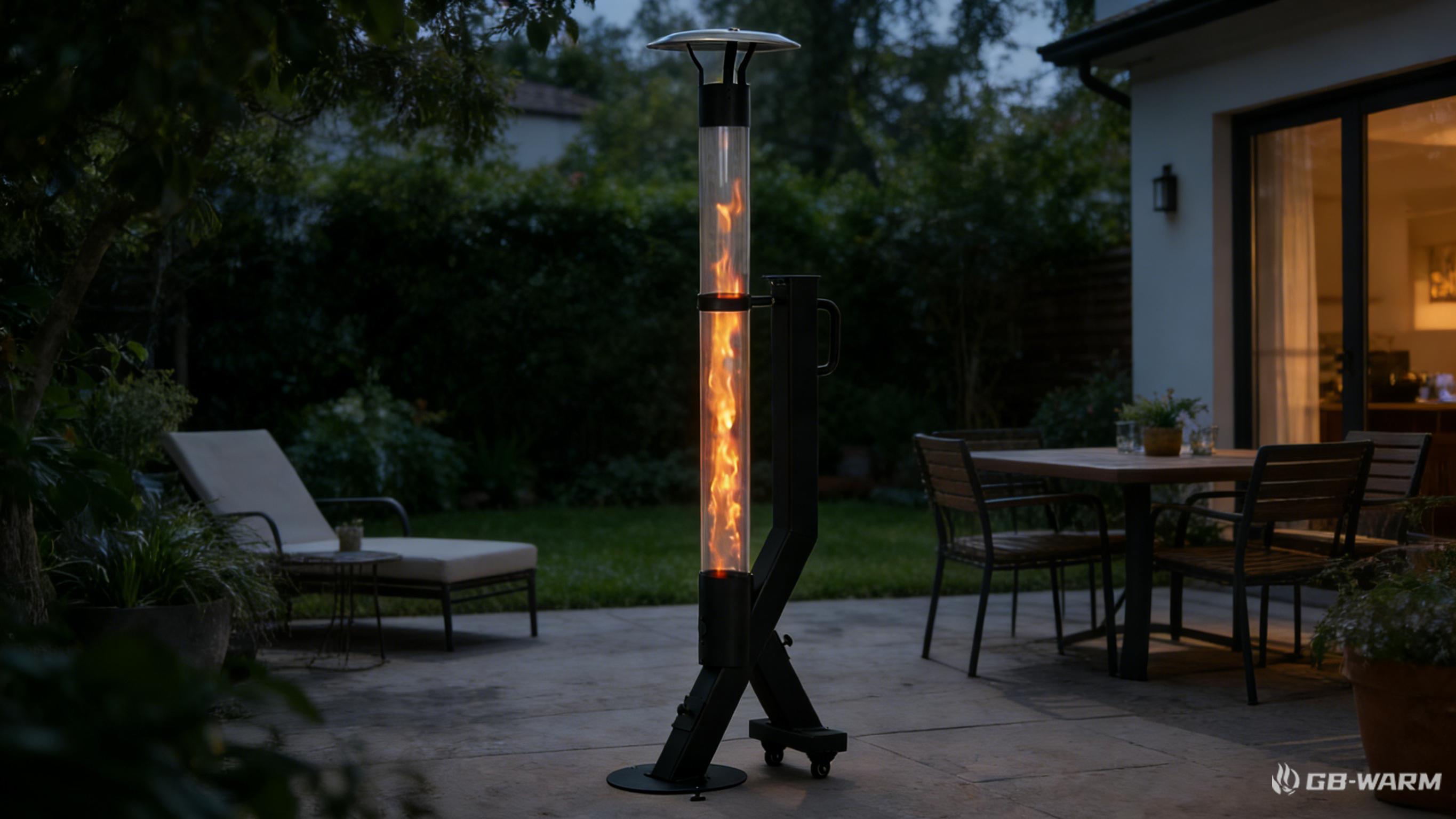
The Case Against Traditional Patio Heaters: Gas and Electric Shortcomings
Before delving into the merits of pellet-fueled models, it’s critical to understand why gas and electric heaters are losing their appeal in an eco-aware Europe. Both options come with significant environmental and practical drawbacks that conflict with modern sustainability goals and consumer expectations.
Gas Heaters: Fossil Fuel Dependence and Emissions
Propane and natural gas heaters have long been popular for their instant heat and portability, but their reliance on fossil fuels makes them a problematic choice in the era of climate action. Natural gas, while often marketed as a "cleaner" fossil fuel, is primarily composed of methane—a greenhouse gas 84 times more potent than carbon dioxide (CO₂) over a 20-year period. Even when burned efficiently, gas heaters release CO₂ directly into the atmosphere, contributing to global warming. According to lifecycle assessment studies, gas heaters have a significantly higher global warming potential (GWP) than biomass alternatives, with their emissions accounting for a large portion of a household’s carbon footprint.
Beyond emissions,
gas heaters pose practical challenges. They require constant refueling with propane tanks or access to a natural gas line, limiting placement flexibility and adding ongoing supply costs. In Europe, where gas prices have fluctuated drastically in recent years due to geopolitical factors, the long-term operational costs of gas heaters have become a growing burden for both residential and commercial users. Additionally, gas heaters carry safety risks, including carbon monoxide poisoning and fire hazards, requiring proper ventilation and regular maintenance to mitigate.
Electric Heaters: Grid Dependence and Hidden Emissions
Electric patio heaters are often perceived as cleaner due to their lack of on-site emissions, but this reputation is misleading. Their environmental impact is tied to the source of the electricity that powers them. In Europe, while renewable energy adoption is growing, a significant portion of the grid still relies on fossil fuels like coal and gas. This means electric heaters indirectly contribute to greenhouse gas emissions, with their GWP and acidification potential (AP) often exceeding those of pellet heaters.
Electric heaters also suffer from inefficiency and high operational costs. Even with a thermal efficiency rating of 95%-98%, their reliance on electricity—one of the most expensive energy sources in Europe—makes them costly to run for extended periods. For example, a 2kW electric heater running for 8 hours a day can add hundreds of euros to annual energy bills. Furthermore, electric heaters often struggle to provide consistent warmth in open outdoor spaces, as heat is lost quickly, requiring higher wattage and increasing energy consumption. Their performance is also vulnerable to power outages, a concern in regions prone to extreme weather.
Pellet-Fueled Patio Heaters: The Sustainable Advantage
Pellet-fueled patio heaters address the shortcomings of gas and electric models by leveraging the power of biomass—renewable, carbon-neutral fuel derived from agricultural and forestry waste. These heaters offer a compelling combination of environmental sustainability, economic efficiency, and reliable performance, making them ideal for Europe’s climate goals and outdoor lifestyle needs.
Carbon Neutrality and Low Environmental Impact
The core environmental benefit of pellet heaters lies in their carbon-neutral operation. Biomass pellets are made from renewable resources such as wood chips, straw, and agricultural byproducts—materials that absorb CO₂ from the atmosphere as they grow. When burned, the pellets release this stored CO₂, creating a closed-loop system that has a negligible net impact on global greenhouse gas levels. In contrast, gas heaters emit CO₂ from fossil fuels that have been sequestered underground for millions of years, adding new carbon to the atmosphere.
Pellet heaters also outperform traditional models in terms of air quality. Modern pellet heaters are equipped with advanced combustion technology and filtration systems that minimize harmful emissions. Sulfur dioxide (SO₂) emissions are nearly non-existent, as biomass pellets have a sulfur content of less than 0.2%, compared to 1%-3% in coal and even small amounts in natural gas. Nitrogen oxide (NOₓ) emissions are controlled through low-nitrogen combustion techniques, and particulate matter is reduced to levels well below European standards with high-efficiency filters. Even the ash produced by pellet combustion is a valuable byproduct—it is rich in potassium and other nutrients, making it an excellent organic fertilizer for gardens, completing the circular economy cycle.
This low environmental impact aligns perfectly with Europe’s stringent climate policies. The revised Renewable Energy Directive (RED III) mandates a 30% reduction in the carbon footprint of energy sources by 2030, and biomass is explicitly recognized as a key renewable energy source to meet this target. Pellet-fueled heaters help both residential and commercial users comply with these regulations while contributing to local sustainability goals.
Economic Efficiency: Lower Costs Over the Lifespan
While the upfront cost of pellet-fueled patio heaters may be slightly higher than gas or electric models, their long-term operational costs are significantly lower— a key consideration for cost-conscious European consumers and businesses. Biomass pellets are highly cost-effective compared to fossil fuels and electricity. In Europe, the price of biomass pellets is approximately one-third that of natural gas and up to 60% cheaper than electricity for the same heat output.
This cost advantage is amplified by Europe’s carbon pricing mechanisms. As carbon taxes rise across the EU, the cost of gas and electric heating—both tied to fossil fuel consumption—will continue to increase. Pellet heaters, by contrast, are exempt from most carbon taxes due to their renewable nature, providing predictable and stable costs for years to come. For commercial users such as restaurants, cafes, and hotels with outdoor seating areas, the savings can be substantial: switching to pellet heaters can reduce annual heating costs by 28% or more, according to industry studies.
Pellet heaters also offer excellent thermal efficiency, further enhancing their economic value. Modern
pellet heaters achieve thermal efficiency ratings of 75%-85%, with advanced models reaching up to 88%. This means more of the energy from the pellets is converted into usable heat, reducing fuel waste and lowering costs. In comparison, gas heaters typically have an efficiency of 90%-95%, but this is offset by the higher cost of gas, while electric heaters’ high efficiency is negated by expensive electricity prices.
Reliable Performance for European Climates
Europe’s diverse climates—from the cold winters of Northern Europe to the mild but crisp autumns of Southern Europe—demand patio heaters that can deliver consistent warmth in varying conditions. Pellet-fueled heaters are designed to meet this challenge, offering powerful, even heat that performs well in open outdoor spaces.
Biomass pellets have a high calorific value, ranging from 3,500 to 4,500 kcal/kg, ensuring they produce ample heat to warm patios and terraces of all sizes. Unlike electric heaters, which struggle with heat loss in windy conditions, pellet heaters generate radiant heat that warms objects and people directly, rather than just the air, providing more effective warmth in outdoor environments. Advanced models also feature adjustable heat settings and programmable timers, allowing users to customize their heating experience and conserve fuel.
Modern pellet heaters are also highly convenient and low-maintenance, addressing past concerns about biomass equipment. They come equipped with automatic feeding systems that store pellets in a hopper and feed them into the combustion chamber as needed, eliminating the need for constant refueling. Ash collection systems are easy to empty, requiring maintenance only once every few days for regular use. For European users, this means the comfort of gas or electric heaters with the sustainability of biomass.
As the demand for pellet-fueled patio heaters grows in Europe, choosing the right manufacturing partner is critical to success. GB-WARM stands out as a top 3 Chinese manufacturer with 19 years of experience in producing and exporting patio heaters, specializing in innovative, high-quality solutions tailored to the European market. Our reputation is built on two core pillars: uncompromising product innovation and exceptional customer satisfaction.
19 Years of European Market Expertise
For nearly two decades, GB-WARM has focused on exporting patio heaters to markets across Europe, including Germany, France, the UK, Italy, and the Nordic countries. This long-standing presence has given us an intimate understanding of European regulations, consumer preferences, and climate needs. Our products also hold CE certification, ensuring seamless market access across the EU.
Innovation at the Core of Our Design
At GB-WARM, innovation is more than a buzzword—it’s embedded in every stage of our product development process. We invest heavily in research and development to create pellet-fueled patio heaters that push the boundaries of efficiency, convenience, and sustainability. Our team of engineers works closely with European partners to develop features tailored to the region’s needs, including:
Low-Nitrogen Combustion Technology: We’ve integrated advanced low-NOₓ burners into our heaters, reducing nitrogen oxide emissions to well below EU limits while maintaining high thermal efficiency.
Weather-Resistant Design: Our heaters are built to withstand Europe’s harsh weather conditions, with corrosion-resistant materials, waterproof hoppers, and freeze protection for reliable performance year-round.
Multi-Fuel Compatibility: While our heaters are optimized for high-quality biomass pellets, they can also accommodate a range of renewable fuels, giving users flexibility and reducing reliance on single fuel sources.
Our commitment to innovation has resulted in numerous patents and industry awards, solidifying our position as a leader in sustainable patio heating technology. We continuously iterate on our designs based on customer feedback and emerging European trends, ensuring our products remain at the forefront of the market.
Customer Reputation: Built on Trust and Reliability
In the competitive European market, customer (reputation) is everything—and GB-WARM has earned the trust of distributors, retailers, and end-users alike. Our customer-centric approach includes transparent communication, reliable delivery times, and comprehensive after-sales support. We work closely with our European partners to understand their unique needs, offering customized solutions such as private labeling, tailored packaging, and localized marketing materials.
Our dedication to quality has resulted in a high customer retention rate, with many of our European partners working with us for over a decade. We pride ourselves on resolving any issues quickly and efficiently, ensuring our customers can focus on growing their businesses without worrying about product performance or supply chain disruptions. For end-users, this means peace of mind knowing they’re investing in a reliable, long-lasting product backed by a manufacturer with a proven track record.
The Future of Outdoor Heating in Europe: Pellets Lead the Way
The global pellet combustion market is projected to exceed $10 billion by 2026, driven by Europe’s energy transition and growing demand for sustainable heating solutions. As consumers become more eco-conscious and governments tighten emissions regulations, pellet-fueled patio heaters are poised to replace gas and electric models as the preferred choice for outdoor heating.
For European businesses and homeowners, the benefits are clear:
pellet heaters offer a sustainable, cost-effective, and reliable way to extend outdoor living seasons while reducing environmental impact. For distributors and retailers, partnering with a trusted manufacturer like GB-WARM provides access to innovative, European-compliant products that meet the growing demand for green heating solutions.
At GB-WARM, we’re excited to lead this transformation. With 19 years of export experience, a commitment to innovation, and a focus on customer satisfaction, we’re well-positioned to help our European partners thrive in the sustainable heating market. Whether you’re looking to expand your product line, meet sustainability goals, or provide your customers with a superior outdoor heating experience, GB-WARM is your ideal partner.
Contact GB-WARM Today
Ready to embrace the future of sustainable outdoor heating? Contact GB-WARM today to learn more about our pellet-fueled patio heaters and how we can support your business in Europe. Our team of experts will work with you to find the perfect solution for your needs, from product customization to logistics support. Join the growing number of European partners who trust GB-WARM for innovative, reliable, and sustainable patio heating solutions.

 Español
 English
 العربية
 Français
 Русский
 Português
 Deutsch
 italiano
 Nederlands
 Polski
 Türkçe
 日本語
日本語 한국어
한국어 ဗမာစာ
ဗမာစာ தமிழ்
தமிழ் Bahasa Indonesia
 Čeština
 қазақ
қазақ Српски
 فارسی
فارسی Slovenčina
 Slovenščina
 Norsk
Norsk Svenska
 Ελληνικά
 Suomi
Suomi Latine
 Dansk
Dansk Shqip
Shqip বাংলা
বাংলা Hrvatski
 Gaeilge
 Eesti keel
 සිංහල
සිංහල नेपाली
 Oʻzbekcha
 latviešu
 Български
 ქართული
 ગુજરાતી
 íslenska
 ಕನ್ನಡ
ಕನ್ನಡ Lietuvių
 Lëtzebuergesch
 മലയാളം
 Malti
Malti मराठी
मराठी ଓଡ଼ିଆ
ଓଡ଼ିଆ پښتو
پښتو ਪੰਜਾਬੀ
 తెలుగు
 isiZulu