As outdoor living continues to grow around the world, demand for reliable and attractive outdoor heating solutions is increasing. Restaurants, hotels, garden retailers, distributors, and outdoor-living brands are looking for patio heaters that offer strong heating performance, attractive designs, and reliable operation.
For companies that want to build or expand their own outdoor-heating product line, Pellet Patio Heater OEM and ODM manufacturing can be an effective solution.
Instead of developing and producing a heater completely from scratch, global buyers can work with an experienced pellet patio heater manufacturer to customize products according to their target market, brand positioning, and sales channels.
But what exactly are OEM and ODM? What can be customized? How should buyers evaluate a manufacturer? And what should importers consider before placing an order?
This guide explains the key points global buyers should know before choosing a pellet patio heater OEM or ODM partner.

What Is Pellet Patio Heater OEM?
OEM stands for Original Equipment Manufacturer.
In an OEM project, the buyer usually provides its own product specifications, brand requirements, design concepts, or technical requirements, while the manufacturer handles production.
For example, a distributor may already have a specific pellet patio heater design and wants to sell it under its own brand. The manufacturer can produce the heater according to the agreed specifications and apply the buyer's branding.
Typical OEM services may include:
OEM is particularly suitable for established brands and distributors that already understand their customers and have clear product requirements.
What Is Pellet Patio Heater ODM?
ODM stands for Original Design Manufacturer.
With ODM manufacturing, the manufacturer provides an existing product design or product platform, which can then be customized for the buyer.
This approach can significantly reduce product-development time and costs.
For example, a buyer may want to launch a pellet patio heater but does not have an engineering team or an existing design. Instead of developing a completely new product, the buyer can select a manufacturer's existing model and customize elements such as the logo, color, packaging, and certain product features.
ODM can be especially attractive for:
The main advantage is that buyers can enter the market faster without investing heavily in product development.
OEM vs ODM: Which Is Better?
There is no universal answer because OEM and ODM serve different business needs.
| OEM | ODM |
| Buyer provides specifications or design | Manufacturer provides an existing design |
| Higher customization potential | Faster product launch |
| Suitable for established brands | Suitable for new brands and distributors |
| May require longer development | Usually shorter development time |
| Greater control over product design | Lower development investment |
If you already have a detailed product concept, OEM may be the better choice.
If you want to launch a pellet patio heater quickly with lower development costs, ODM may be more practical.
Some experienced manufacturers can also provide a combination of OEM and ODM services, allowing buyers to start with an existing product and gradually develop customized versions.
What Can Be Customized?
One of the most important questions buyers should ask is: How much can the pellet patio heater actually be customized?
Customization depends on the manufacturer's engineering and production capabilities, but common options include the following.
1. Branding
Private-label branding is one of the most common requirements.
Manufacturers may be able to add:
Logo
Brand name
Product labels
Rating plates
Packaging graphics
Instruction manuals
This allows distributors and retailers to build a consistent brand identity.
2. Product Appearance
For companies targeting premium outdoor-living customers, appearance can be just as important as heating performance.
Depending on the manufacturer, buyers may customize:
A distinctive design can help a brand differentiate itself from competing patio heaters.
3. Packaging
Packaging is particularly important for international distribution.
OEM and ODM packaging may include customized:
Good packaging should protect the heater during international transportation while also presenting the brand professionally.
Why Work Directly With a Pellet Patio Heater Manufacturer?
For global buyers, choosing the right manufacturing partner can have a major impact on product quality, cost, delivery time, and long-term business growth.
Working directly with an experienced manufacturer can provide several advantages.
Better Product Knowledge
A specialized manufacturer understands the structure, heating system, combustion process, materials, and production requirements of pellet patio heaters.
This knowledge can help buyers identify potential problems before mass production.
More Flexible Customization
Manufacturers with their own engineering and production capabilities can usually provide more customization options than companies that simply source products from different factories.
Better Quality Control
A professional factory can control important stages of production, including:
This is particularly important for products that will be sold in different international markets.
Better Communication
Direct communication between the buyer and manufacturer can make product development easier.
Instead of communicating through multiple intermediaries, buyers can discuss specifications, samples, packaging, quality requirements, and production schedules directly with the factory.
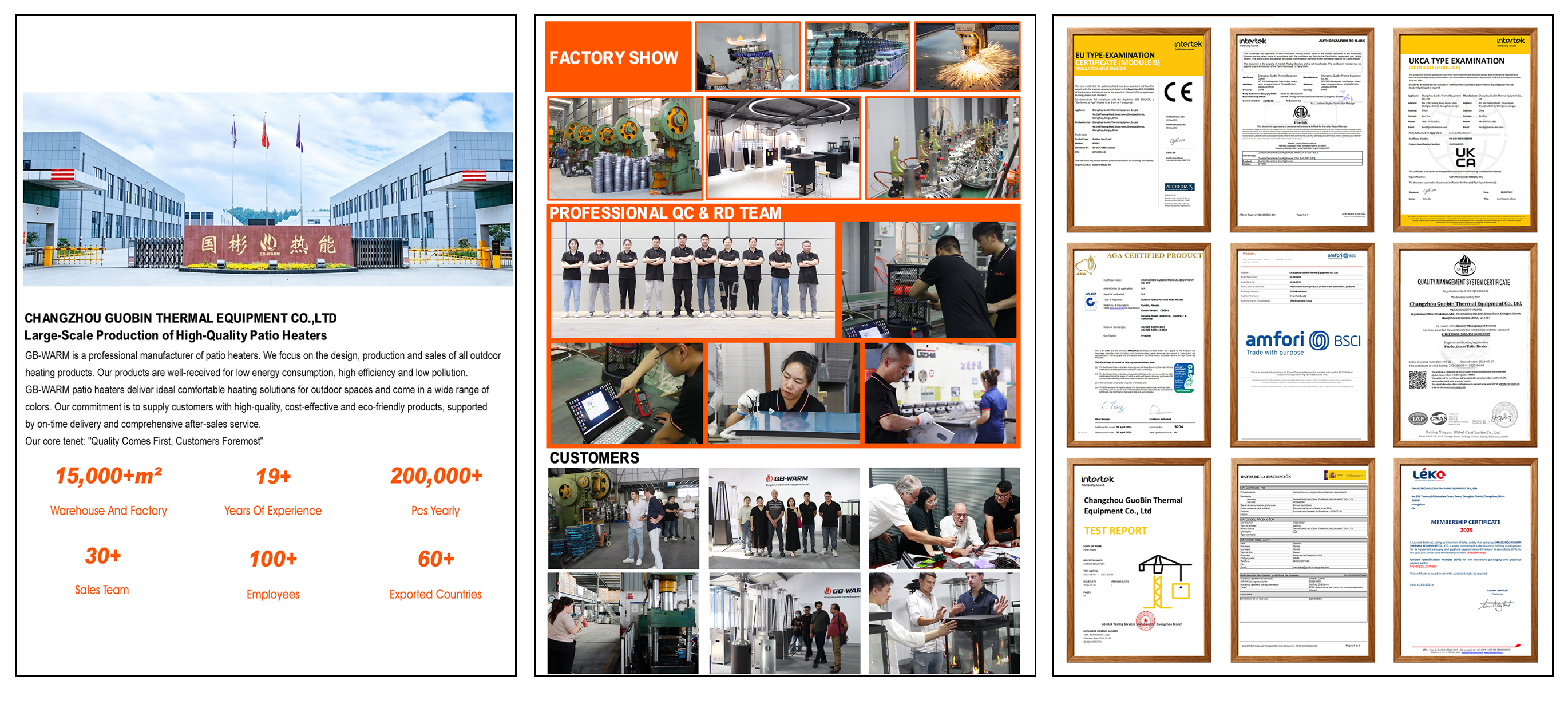
What Should Global Buyers Ask Before Choosing a Manufacturer?
Before selecting an OEM or ODM pellet patio heater supplier, buyers should evaluate more than just the quoted price.
Consider asking:
1. How many years of experience does the manufacturer have?
Experience can indicate whether the manufacturer understands international production and quality requirements.
2. Does the factory have its own engineering team?
Engineering capability is important for genuine OEM and ODM projects.
3. Can the manufacturer provide product samples?
A sample allows buyers to evaluate design, materials, operation, heating performance, and workmanship before mass production.
4. What customization options are available?
Ask specifically about branding, colors, packaging, product specifications, and design modifications.
5. What quality-control procedures are used?
A clear quality-control process is essential for long-term cooperation.
6. What is the MOQ?
Minimum order quantity can have a significant impact on the investment required for a new product.
7. Can the manufacturer support international markets?
Export experience can be valuable because different markets may have different documentation, labeling, safety, and compliance requirements.
Don't Choose an OEM/ODM Supplier Based Only on Price
Price is important, but it should not be the only factor.
A low factory quotation may become expensive if the product has inconsistent quality, poor packaging, high defect rates, delayed shipments, or inadequate after-sales support.
For pellet patio heaters, buyers should evaluate the total cost of ownership, including:
A reliable manufacturer may not always offer the lowest initial price, but consistent quality and dependable production can create better long-term value.
OEM & ODM for Different Global Markets
Different markets can have different customer expectations.
European buyers may focus heavily on product quality, design, energy efficiency, documentation, and applicable compliance requirements.
North American customers may place greater emphasis on outdoor entertainment, product performance, durability, and ease of use.
Meanwhile, commercial customers such as restaurants and hotels may prioritize heating coverage, operating cost, reliability, appearance, and ease of maintenance.
A capable OEM/ODM manufacturer should be able to discuss these market requirements with buyers and help develop products that fit the intended application.
Buyers should always confirm the specific regulatory and certification requirements applicable to their destination market before production and importation.
How the OEM/ODM Process Usually Works
A typical pellet patio heater OEM or ODM project may follow these steps:
Step 1: Define the Market
Determine the target country, customer type, sales channel, and expected price range.
Step 2: Select a Manufacturer
Compare manufacturing experience, product quality, customization capabilities, MOQ, certifications, and export experience.
Step 3: Choose an Existing Model or Develop a Concept
ODM buyers can start with an existing model, while OEM buyers may provide their own design or specifications.
Step 4: Confirm Customization
Finalize the product design, branding, colors, packaging, specifications, and other requirements.
Step 5: Develop and Approve Samples
The manufacturer produces samples for testing and evaluation.
Step 6: Confirm Production Specifications
All technical and commercial details should be clearly documented before mass production.
Step 7: Mass Production
The factory begins production according to the approved specifications and quality requirements.
Step 8: Inspection and Shipment
The finished products are inspected, packed, and prepared for international shipment.
Why OEM & ODM Can Be a Smart Strategy
For global outdoor-heating businesses, OEM and ODM manufacturing provide an opportunity to build a differentiated product line without establishing their own factory.
Instead of competing only on price with generic products, a company can develop a recognizable brand with customized products, packaging, and positioning.
This can be particularly valuable for distributors and retailers that want to create long-term customer relationships.
The right manufacturer should be more than a supplier. Ideally, it should be a long-term product-development partner.
Look for a manufacturer with:
Strong pellet patio heater expertise
Professional engineering capabilities
Stable production capacity
Consistent quality control
OEM and ODM experience
International export experience
Flexible customization options
Reliable communication
Professional after-sales support
For global buyers, this combination can make the difference between simply importing a product and successfully building a competitive outdoor-heating brand.
Final Thoughts
Pellet Patio Heater OEM & ODM manufacturing gives global buyers more flexibility when developing their own outdoor-heating products.
OEM is ideal for companies with their own product specifications or designs, while ODM can help businesses launch products faster by leveraging an existing manufacturer-developed design.
Whether you are a distributor, importer, retailer, restaurant-supply company, or outdoor-living brand, the most important step is to select a manufacturer with proven pellet patio heater expertise, reliable quality control, strong customization capabilities, and international manufacturing experience.
The right OEM/ODM partner can help you move from product concept to finished product more efficiently—and build a pellet patio heater product line that is designed for your market, your customers, and your brand.
Frequently Asked Questions
Is OEM or ODM better for a new pellet patio heater brand?
ODM is often a practical starting point because buyers can use an existing product design and customize branding and packaging. OEM may be more suitable when a company already has specific product requirements.
Can I customize the logo and packaging of a pellet patio heater?
Yes. Logo, product labeling, packaging, manuals, and other branding elements are commonly included in OEM and ODM projects, depending on the manufacturer's capabilities.
What is the typical MOQ for OEM pellet patio heaters?
MOQ varies by manufacturer, product model, customization requirements, and production arrangement. Buyers should confirm the MOQ directly with the manufacturer.
Can pellet patio heaters be customized for European markets?
They can be developed and configured for specific target markets, but buyers should confirm applicable European safety, labeling, documentation, and compliance requirements before placing an order.
How do I choose a reliable pellet patio heater manufacturer?
Evaluate manufacturing experience, engineering capabilities, product samples, quality-control procedures, customization capabilities, export experience, MOQ, lead times, and after-sales support rather than comparing price alone.

 Español
 English
 العربية
 Français
 Русский
 Português
 Deutsch
 italiano
 Nederlands
 Polski
 Türkçe
 日本語
日本語 한국어
한국어 ဗမာစာ
ဗမာစာ தமிழ்
தமிழ் Bahasa Indonesia
 Čeština
 қазақ
қазақ Српски
 فارسی
فارسی Slovenčina
 Slovenščina
 Norsk
Norsk Svenska
 Ελληνικά
 Suomi
Suomi Latine
 Dansk
Dansk Shqip
Shqip বাংলা
বাংলা Hrvatski
 Gaeilge
 Eesti keel
 සිංහල
සිංහල नेपाली
 Oʻzbekcha
 latviešu
 Български
 ქართული
 ગુજરાતી
 íslenska
 ಕನ್ನಡ
ಕನ್ನಡ Lietuvių
 Lëtzebuergesch
 മലയാളം
 Malti
Malti मराठी
मराठी ଓଡ଼ିଆ
ଓଡ଼ିଆ پښتو
پښتو ਪੰਜਾਬੀ
 తెలుగు
 isiZulu