Outdoor dining has become an important part of the restaurant business. Whether it is a sidewalk café, rooftop restaurant, hotel terrace, or garden dining area, a comfortable outdoor space can help restaurants accommodate more customers and extend their dining season.
However, when temperatures drop, restaurants need an effective outdoor heating solution.
Two popular options are wood pellet patio heaters and electric patio heaters. Both can provide warmth, but they work in very different ways and offer different advantages for commercial applications.
So, which is better for outdoor restaurants?
The answer depends on the restaurant's space, heating requirements, operating costs, installation conditions, and business model.
In this guide, we compare pellet and electric patio heaters to help restaurant owners, distributors, and hospitality businesses make a better purchasing decision.
1. How Do Pellet and Electric Patio Heaters Work?
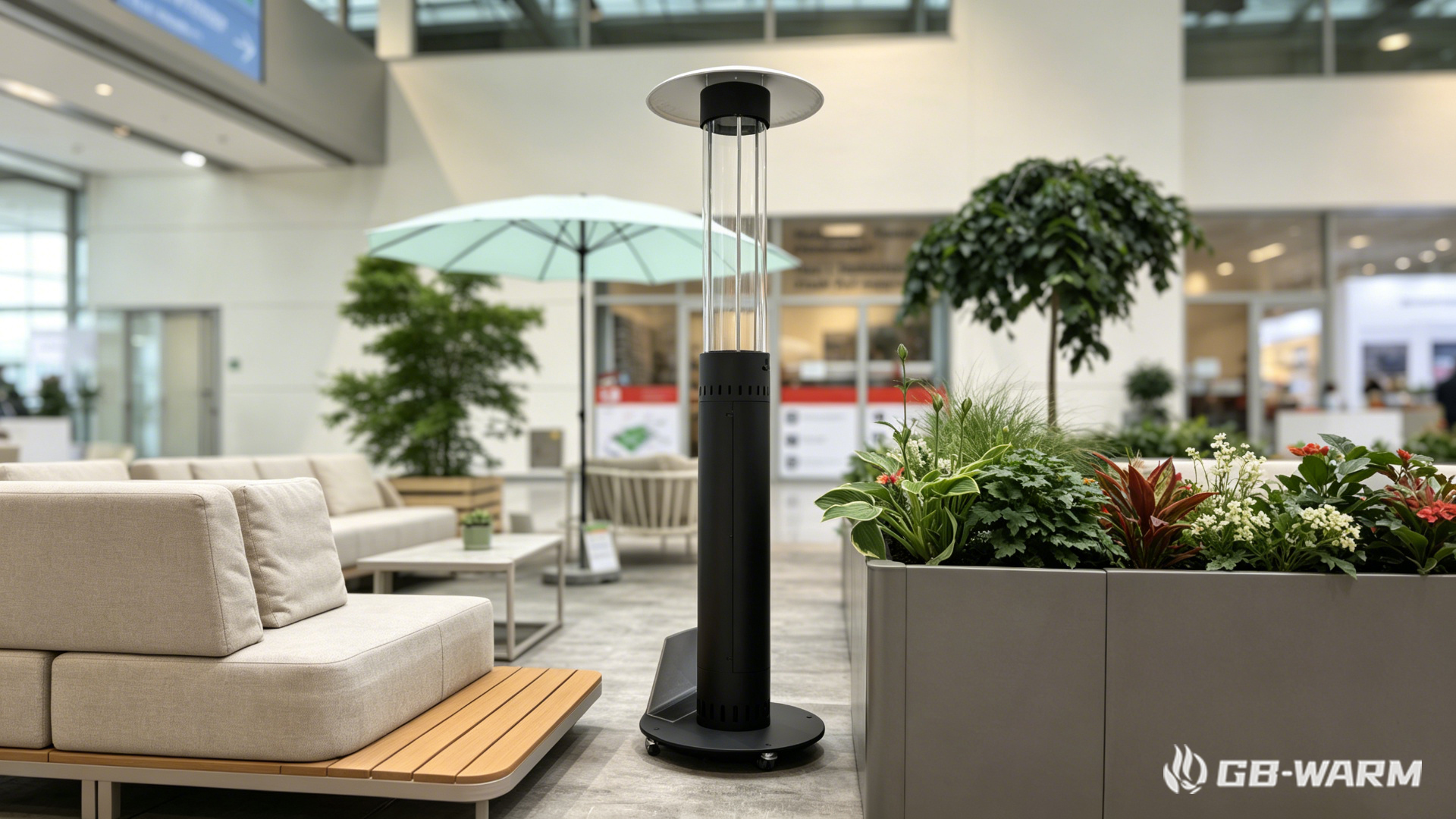
A wood pellet patio heater burns compressed wood pellets to generate heat. Wood pellets are made from compressed biomass and provide a concentrated source of thermal energy.
Many commercial pellet patio heaters are designed for outdoor terraces, restaurants, cafés, hotels, and hospitality spaces. They typically include a pellet hopper, combustion chamber, heat outlet, and chimney or exhaust system.
An electric patio heater, on the other hand, uses electricity to power a heating element. Infrared electric heaters are particularly common because they can provide directional radiant heat without burning fuel.
The basic difference is simple:
Pellet patio heater = heat generated by burning wood pellets
Electric patio heater = heat generated by electricity
This difference affects almost every aspect of commercial operation.
2. Heating Performance
For outdoor restaurants, heating performance is one of the most important considerations.
Electric infrared heaters are effective when customers are positioned relatively close to the heating element. They provide radiant heat directly to people and objects rather than heating the entire outdoor environment.
However, outdoor areas are exposed to wind, cold temperatures, and changing weather conditions. The effectiveness of an electric heater can therefore depend heavily on its installation position and electrical power.
Wood pellet patio heaters generate heat through combustion and can provide strong radiant and convective heat. Many freestanding pellet heaters are designed to distribute heat around the unit, making them suitable for larger outdoor seating areas.
For restaurants with relatively large terraces or open-air dining areas, pellet heating can be an attractive option when strong, continuous outdoor heating is required.
3. Running Cost
Operating cost is another major consideration for restaurants.
Electric patio heaters consume electricity every hour they operate. As electricity prices vary significantly between European countries and regions, long operating hours can contribute substantially to a restaurant's energy expenses.
Wood pellet patio heaters use wood pellets as fuel. Pellet prices also vary by market, but wood pellets can offer an economical heating solution in many regions.
The actual cost depends on several factors:
Heater power and heat output
Operating hours per day
Local wood pellet prices
Outdoor temperature
Wind conditions
Desired comfort temperature
Number of heaters required
For a restaurant operating several heaters every evening throughout the colder months, calculating the total seasonal energy cost is more useful than comparing the purchase price of one heater.
A professional buyer should calculate cost per hour and total seasonal operating cost before making a decision.
4. Installation Requirements
Electric patio heaters generally have an advantage when it comes to installation.
They require an appropriate electrical connection and can often be mounted on walls, ceilings, umbrellas, or other suitable structures, depending on the product design.
However, restaurants need to check whether their electrical infrastructure can support multiple high-power heaters operating simultaneously.
Pellet patio heaters are generally freestanding and do not require a permanent electrical connection for heat generation. This can provide greater flexibility when arranging outdoor seating areas.
However, pellet heaters require fuel storage and regular pellet loading. Some models may also require appropriate ventilation and exhaust design.
For restaurants with flexible outdoor layouts, freestanding pellet heaters can provide an advantage because they can be positioned where heat is needed.
5. Maintenance and Daily Operation
Electric heaters are relatively simple to operate. Once installed, the restaurant staff can usually switch the heater on and off with minimal maintenance.
There is no ash removal or fuel loading.
Pellet patio heaters require more active operation. Staff may need to load wood pellets, clean ash, inspect the combustion area, and perform periodic maintenance.
However, modern pellet patio heaters can be designed to simplify these tasks.
For a busy restaurant, ease of operation is important. Before purchasing, restaurant owners should consider not only the heating performance but also how much staff time is required to operate and maintain the equipment.
6. Environmental Considerations
Environmental performance is becoming increasingly important for European hospitality businesses.
Electric heating produces no combustion emissions at the point of use. However, the overall environmental impact of electric heating depends partly on how the electricity is generated.
Wood pellets are a biomass fuel and can provide a renewable heating option when sourced responsibly. Pellet heating also uses a solid fuel made from compressed wood material.
For businesses looking at sustainability, it is important to consider the complete energy cycle rather than focusing only on the heater itself.
Restaurant owners should also check local environmental regulations and requirements before choosing a commercial outdoor heating system.
7. Pellet vs Electric: Which Is Better for Restaurants?
There is no single answer for every restaurant.
Electric patio heaters may be better when:
The restaurant has convenient electrical infrastructure.
The outdoor seating area is relatively small.
Customers sit close to the heating source.
Low daily maintenance is a priority.
The restaurant prefers simple on/off operation.
The business has access to cost-effective electricity.
Pellet patio heaters may be better when:
The restaurant has a larger outdoor terrace.
Strong outdoor heating is required.
Flexible heater placement is important.
Long operating hours are expected.
The restaurant wants an alternative to electricity-based heating.
The business has convenient access to wood pellets.
The restaurant wants a distinctive flame-based outdoor atmosphere.
In many hospitality environments, the visual experience also matters.
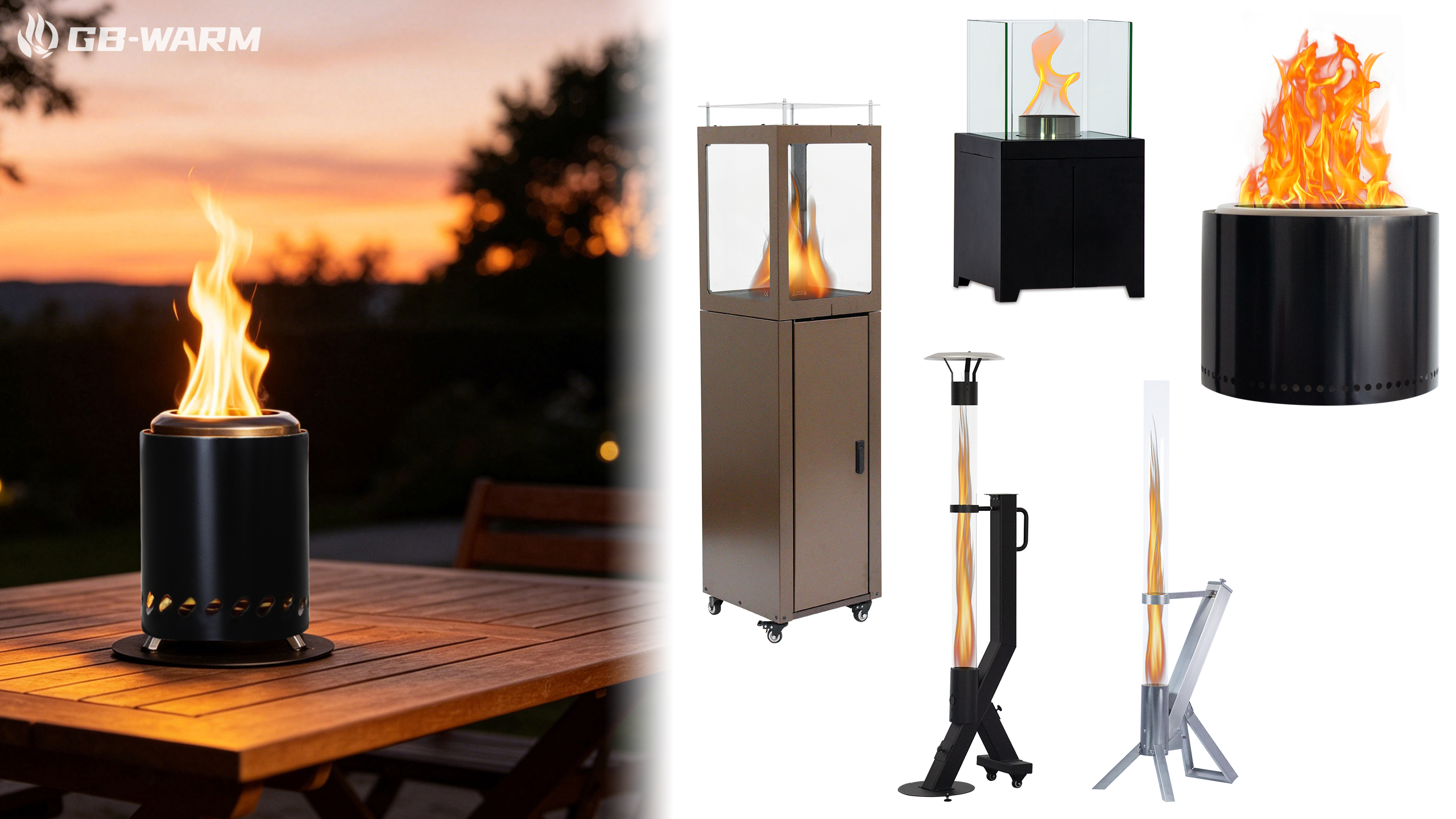
A pellet patio heater can provide both heat and a visible flame effect, creating a warm and attractive atmosphere that can complement outdoor dining.
8. What Should Restaurant Buyers Consider?
Before purchasing commercial patio heaters, restaurant owners and procurement teams should evaluate more than the heater's advertised heat output.
Consider these factors:
1. Outdoor area size
Measure the terrace and determine how many heaters are required.
2. Climate
A restaurant in Northern Europe may have very different heating requirements from one in Southern Europe.
3. Wind exposure
Open terraces exposed to strong wind generally require a different heating strategy from sheltered patios.
4. Operating hours
Calculate how many hours per day and how many months per year the heaters will operate.
5. Energy or fuel cost
Compare local electricity and pellet prices based on actual expected consumption.
6. Maintenance
Consider cleaning, fuel loading, spare parts, and staff operation.
7. Product quality
Commercial heaters should be designed for frequent and extended outdoor use.
8. Supplier reliability
For restaurants purchasing multiple units, distributors and importers, the manufacturer's production capacity, quality control, spare parts support, and OEM capability are also important.
9. Why Choose a Pellet Patio Heater for Commercial Outdoor Dining?
For restaurants that need flexible and powerful outdoor heating, pellet patio heaters can offer a combination of heat, atmosphere, fuel flexibility, and commercial practicality.
Unlike a simple electric heating element, a pellet patio heater can become part of the outdoor dining experience.
The visible flame can create a warm focal point, while the heat helps make outdoor seating more comfortable during colder evenings.
For restaurant groups, distributors, and hospitality equipment suppliers, pellet patio heaters can also provide opportunities for product differentiation.
OEM and private-label solutions are available from experienced manufacturers, allowing businesses to customize products according to their market, brand, and application requirements.
10. Final Verdict: Pellet or Electric?
So, pellet vs electric patio heaters: which is better for outdoor restaurants?
Electric patio heaters are a practical choice for restaurants that prioritize simple operation, easy installation, and low maintenance.
Wood pellet patio heaters are particularly attractive for restaurants looking for strong outdoor heating, flexible placement, fuel-based operation, and a more distinctive flame atmosphere.
The best solution depends on your restaurant's specific conditions.
If you are purchasing one or two heaters for a small terrace, electric heating may be the simplest option.
If you are heating a larger outdoor restaurant, café, hotel terrace, or hospitality area and expect long operating hours, a commercial wood pellet patio heater may deserve serious consideration.
The most important step is to compare the total cost of ownership, not simply the initial purchase price.
Evaluate heating performance, operating cost, maintenance, installation, fuel availability, outdoor conditions, and supplier support before making your final decision.
For restaurant owners, distributors, and importers, choosing the right heating technology can help create a more comfortable outdoor environment while making better use of valuable outdoor dining space.
Frequently Asked Questions
Are pellet patio heaters suitable for restaurants?
Yes. Commercial pellet patio heaters can be suitable for restaurants, cafés, hotels, terraces, and other outdoor hospitality applications, particularly where strong and continuous outdoor heating is required.
Are electric patio heaters cheaper to operate than pellet heaters?
It depends on local electricity and wood pellet prices, heater power, operating hours, and outdoor conditions. Restaurants should calculate the actual cost per operating hour before making a decision.
Do pellet patio heaters require electricity?
Some pellet patio heater designs can operate with little or no external electrical power, while others may use electricity for components such as fans, ignition, or controls. Buyers should check the specifications of each model.
Which patio heater is better for a large restaurant terrace?
For larger outdoor areas, commercial pellet patio heaters can be an attractive option because they can provide strong heat and flexible freestanding placement. However, the final choice should be based on the terrace layout, climate, fuel availability, and local regulations.
Can pellet patio heaters be customized for restaurant brands?
Yes. Experienced manufacturers may offer OEM and private-label services, including product appearance, branding, packaging, and selected functional configurations.

 Español
 English
 العربية
 Français
 Русский
 Português
 Deutsch
 italiano
 Nederlands
 Polski
 Türkçe
 日本語
日本語 한국어
한국어 ဗမာစာ
ဗမာစာ தமிழ்
தமிழ் Bahasa Indonesia
 Čeština
 қазақ
қазақ Српски
 فارسی
فارسی Slovenčina
 Slovenščina
 Norsk
Norsk Svenska
 Ελληνικά
 Suomi
Suomi Latine
 Dansk
Dansk Shqip
Shqip বাংলা
বাংলা Hrvatski
 Gaeilge
 Eesti keel
 සිංහල
සිංහල नेपाली
 Oʻzbekcha
 latviešu
 Български
 ქართული
 ગુજરાતી
 íslenska
 ಕನ್ನಡ
ಕನ್ನಡ Lietuvių
 Lëtzebuergesch
 മലയാളം
 Malti
Malti मराठी
मराठी ଓଡ଼ିଆ
ଓଡ଼ିଆ پښتو
پښتو ਪੰਜਾਬੀ
 తెలుగు
 isiZulu