Bulk purchasing pellet heaters is very different from buying one unit for personal use. For restaurants, cafés, hotels, outdoor hospitality businesses, distributors, importers, and retailers, a large order represents a significant investment. Product quality, compliance, fuel efficiency, delivery reliability, customization, and after-sales support can all directly affect the profitability of the business.
Choosing the right pellet heater manufacturer is therefore not simply about finding the lowest unit price. A reliable supplier should be able to provide consistent product quality, clear technical specifications, appropriate certifications, stable production capacity, and long-term support.
If you are planning to order wood pellet patio heaters in bulk, asking the right questions before placing your purchase order can help reduce risks and avoid expensive problems later.
Here are the most important questions to ask your pellet heater supplier before ordering in bulk.
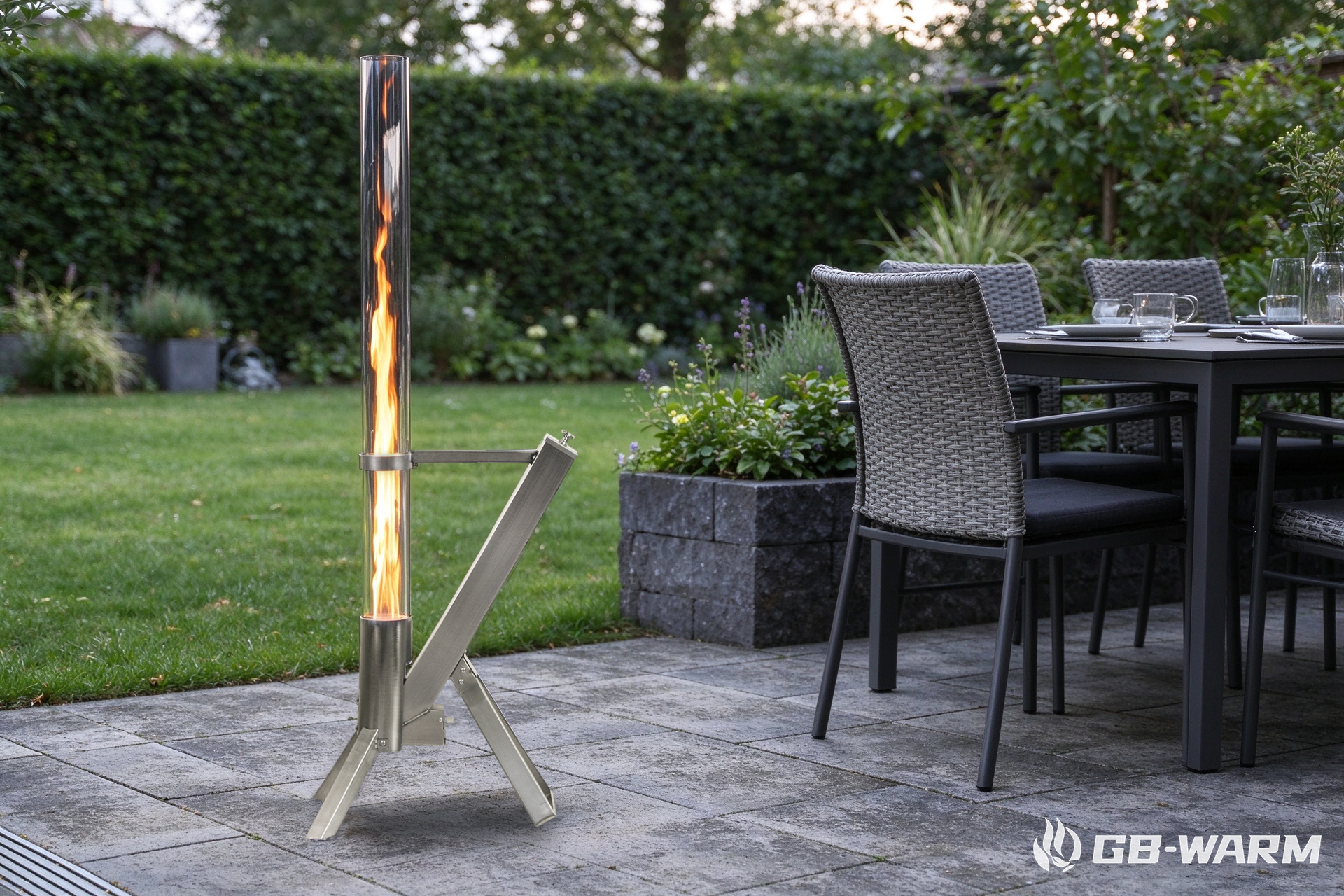
1. What Type of Pellet Heater Do You Offer?
The first question should be simple: What type of pellet heater is suitable for my application?
Pellet heaters come in different designs, heating capacities, structures, ignition systems, fuel systems, and operating methods. A model suitable for a small café terrace may not be the right choice for a large outdoor restaurant or hotel.
Before ordering, discuss your application with the manufacturer.
For example:
How large is the outdoor area?
Is the heater mainly used for restaurants, cafés, hotels, or residential applications?
How many customers need to be covered?
Will the heater operate for several hours every day?
Is portability important?
Will the heaters be used seasonally or throughout the year?
What type of wood pellets are available in your target market?
A professional manufacturer should be able to recommend models based on your application rather than simply sending you a product catalogue.
For European buyers, it is also important to consider local weather conditions. Outdoor heating requirements can vary significantly between Northern and Southern Europe.
2. What Is the Heating Capacity?
Heating capacity is one of the most important technical specifications when purchasing pellet heaters in bulk.
Ask the supplier for detailed information about the heater's heating performance rather than relying only on marketing terms such as "high heat output" or "powerful heating."
Important specifications may include:
The manufacturer should explain how these figures were obtained and under what testing conditions.
For commercial applications, understanding heating performance helps buyers calculate how many heaters are needed for a particular outdoor space.
For example, a restaurant may need several heaters distributed around an outdoor dining area rather than relying on one very powerful unit.
This can improve heat distribution and provide greater flexibility for different seating arrangements.
3. How Much Wood Pellet Does the Heater Consume?
Fuel consumption directly affects the operating cost of a commercial outdoor heating system.
A heater with a low purchase price may become expensive if it consumes excessive amounts of fuel.
Ask the supplier:
How many kilograms of wood pellets does the heater consume per hour?
You should also ask whether fuel consumption changes according to the heating level.
For example, a heater may have different consumption rates at low, medium, and maximum output.
This information allows buyers to estimate the real operating cost.
A simple calculation can be used:
Daily fuel cost = hourly pellet consumption × operating hours × pellet price
For restaurants and hotels operating multiple heaters every evening, even a small difference in fuel consumption can become significant over a full season.
This is why B2B buyers should evaluate total operating cost, not just the initial purchase price.
4. What Size and Type of Wood Pellets Should Be Used?
Not all wood pellets are exactly the same.
Pellet diameter, quality, moisture content, density, and composition can affect combustion performance.
Before placing a bulk order, ask:
What pellet diameter is recommended?
What pellet quality is required?
Can standard commercial wood pellets be used?
Does the heater require a specific pellet specification?
What happens if the pellet quality varies?
How should pellets be stored?
This is particularly important for distributors selling heaters in different European markets.
A heater that performs well with commonly available pellets is generally easier to sell and operate than a product requiring a very specific fuel specification.
The supplier should provide clear instructions in the product manual.
5. What Certifications and Compliance Documents Are Available?
For European importers and distributors, product compliance should be discussed before placing a purchase order—not after the goods arrive.
Ask the manufacturer:
Which certifications and compliance documents are available for this model?
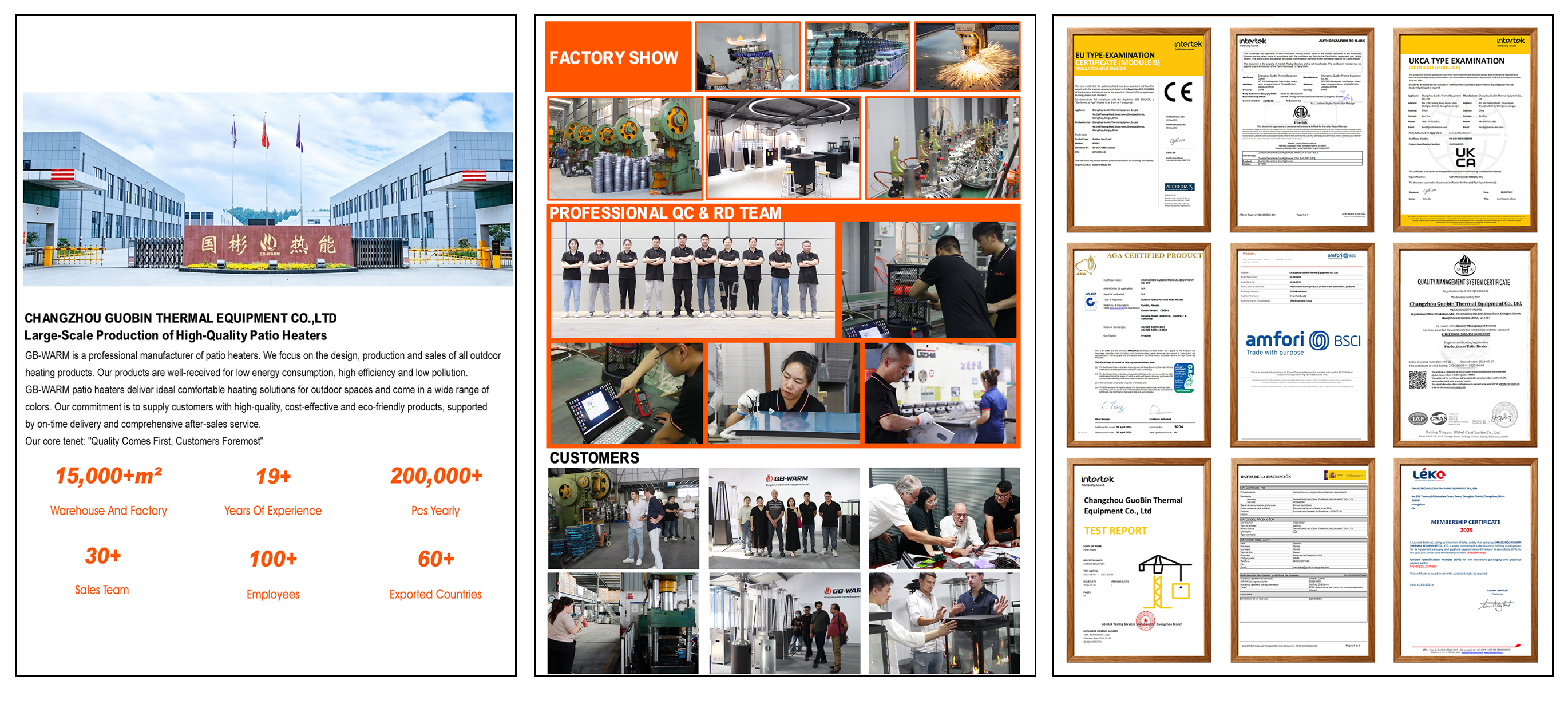
Depending on the product, target market, and applicable regulations, documentation may include relevant CE-related documentation, testing reports, declarations of conformity, and other market-specific requirements.
Do not simply ask, "Does it have CE?"
Ask for the actual documents and confirm that they correspond to the exact model you are purchasing.
You should also clarify:
Which laboratory conducted the testing?
Which model number appears on the report?
When was the product tested?
Are the documents current?
Are the documents applicable to the destination market?
Can the supplier provide technical files or other required documentation?
A professional manufacturer should understand that compliance documentation is an important part of an international B2B order.
6. Can the Manufacturer Provide Product Samples?
Before ordering hundreds of units, it is often sensible to evaluate a sample.
Ask whether the supplier can provide a production sample for testing.
During sample evaluation, you can check:
Appearance
Material quality
Welding quality
Surface finishing
Assembly
Ignition
Fuel feeding
Heat output
Stability
Safety features
Ease of cleaning
Packaging
For distributors, the sample can also be used for internal testing, photography, demonstrations, exhibitions, and customer evaluation.
A sample should represent the product that will actually be supplied in the bulk order.
7. What Materials Are Used?
Outdoor heaters are exposed to weather, temperature changes, moisture, and frequent handling.
Material selection therefore matters.
Ask the manufacturer about:
Main body material
Burner material
Heat-resistant components
Glass tube material, if applicable
Stainless steel components
Surface treatment
Coating thickness
Corrosion resistance
If the heaters are intended for commercial outdoor use, durability can be more important than appearance alone.
A restaurant may operate its heaters for many hours every day during the outdoor season. A hotel or distributor may expect the product to remain attractive after years of outdoor use.
Therefore, material specifications should be discussed before ordering.
8. What Is the Expected Service Life?
A good B2B buyer should ask not only how the heater performs when new, but also how it performs after long-term use.
Ask the manufacturer:
What is the expected service life under normal commercial use?
You can also ask:
Which parts normally wear out first?
How frequently should maintenance be performed?
Which components are replaceable?
How easy is it to access internal components?
Are spare parts available?
The answers can help you estimate long-term maintenance costs.
For commercial customers, a heater is not simply a product. It is part of an outdoor heating system that needs to remain operational throughout the business season.
9. Are Spare Parts Available?
This is one of the most important questions for importers and distributors.
Even a high-quality product may eventually require replacement components.
Ask whether the manufacturer can supply spare parts such as:
Burners
Ignition components
Control components
Fuel-related components
Glass tubes
Reflectors
Wheels
Handles
10. What Is the Minimum Order Quantity?
MOQ is another critical point before bulk purchasing.
Ask:
What is the MOQ for this model?
But do not stop there.
You should also ask whether the MOQ changes for:
Different colours
Different packaging
Private-label products
Customized components
Different logos
Mixed container orders
Some manufacturers may allow buyers to combine different models in one shipment, while others may have separate MOQs for each model.
Understanding these rules early can make purchasing and inventory planning much easier.
11. Can the Heater Be Customized?
If you are a distributor, importer, or established brand, customization may be important.
Ask the manufacturer what customization options are available.
These may include:
Logo
Product colour
Packaging
User manual
Product labels
Carton design
Product dimensions
Selected components
Accessories
Control systems
Not every manufacturer has the same level of customization capability.
A factory with its own engineering and production teams may be able to provide more flexible OEM and ODM solutions than a trading company that simply purchases standard products from another supplier.
If customization is important to your business, discuss it before confirming the order.
12. What Is the Production Capacity?
Imagine placing a large order and then discovering that the supplier cannot deliver it on schedule.
This can create serious problems for seasonal products.
Before ordering, ask:
What is your monthly production capacity for this model?
Also ask:
How many production lines are available?
What is the normal lead time?
What is the maximum monthly output?
How does the factory handle peak-season orders?
Can production capacity be reserved for large customers?
For outdoor heating products, timing can be especially important because demand is often seasonal.
A delayed shipment arriving after the main outdoor season may have a major impact on a distributor's sales plan.
13. What Is the Normal Lead Time?
Never assume that the lead time is simply "30 days."
Ask the manufacturer to clarify whether the lead time starts from:
For customized products, the actual timeline may include product development, sample approval, packaging design, material purchasing, production, inspection, and loading.
A clear production schedule helps both sides avoid misunderstandings.
14. How Is Quality Control Managed?
Quality control is particularly important for bulk orders.
Ask the manufacturer to explain its QC process.
A reliable production process may include inspection of:
Incoming materials → Production → Assembly → Functional testing → Final inspection → Packaging
You can also ask:
Is every heater tested?
Are heating and ignition functions tested?
Are safety components checked?
Is there an inspection report?
Can third-party inspection be arranged?
How are defective products handled?
For large orders, buyers may also consider using an independent inspection company before shipment.
15. How Is the Product Packaged?
Pellet heaters can contain metal components, glass components, and other parts that may be damaged during transportation.
Ask the manufacturer for details about export packaging.
Important questions include:
How many units per carton?
What are the carton dimensions?
What is the gross and net weight?
Is the product protected against impact?
Is the packaging suitable for container transportation?
How many units fit in a 20-foot or 40-foot container?
Is pallet packing available?
Container loading efficiency can significantly affect the landed cost of large orders.
16. What Are the Payment and Shipping Terms?
Before signing the purchase contract, make sure payment and shipping terms are clearly defined.
Common questions include:
What payment terms are available?
What is the deposit?
When is the balance due?
Which Incoterms are available?
What port will be used?
Who arranges transportation?
What documents will be provided?
For international B2B transactions, all commercial terms should be confirmed in writing.
17. What After-Sales Support Do You Provide?
After-sales support is often overlooked during supplier selection.
However, it can become extremely important once hundreds of heaters are being used by your customers.
Ask the supplier:
What happens if a customer reports a product problem?
Clarify:
For distributors, strong manufacturer support can make it easier to handle customer service in the local market.
18. Can You Provide Technical and Marketing Materials?
A professional manufacturer should ideally provide more than the physical product.
Ask whether the supplier can provide:
These materials can help distributors create product listings, catalogues, websites, sales presentations, and technical documentation.
19. Are You a Manufacturer or a Trading Company?
This is one of the most important questions for a serious B2B buyer.
Ask directly:
Are you the actual manufacturer of the pellet heater?
If the supplier claims to be a factory, you can request:
Working directly with a manufacturer can sometimes provide greater flexibility for OEM/ODM projects, product development, customization, and long-term cooperation.
However, the most important point is to verify the supplier's actual capabilities rather than relying only on its marketing claims.
20. Can We Build a Long-Term Partnership?
Finally, do not look at a bulk order as a single transaction.
Ask the manufacturer how they support long-term customers.
For example:
Can product improvements be developed together?
Can new models be developed annually?
Can production capacity be planned in advance?
Can spare parts be stocked?
Can packaging be customized?
Can the supplier support market-specific requirements?
A strong manufacturer relationship can become an important part of your supply chain.
Instead of constantly searching for new suppliers, you can develop a stable partnership with a factory that understands your market, product requirements, quality standards, and sales strategy.
Conclusion
Ordering pellet heaters in bulk should not be based on unit price alone. For restaurants, cafés, hotels, distributors, and importers, the real cost of a product includes fuel consumption, durability, maintenance, logistics, compliance, warranty, and after-sales support.
The right supplier should be able to answer technical and commercial questions clearly and provide appropriate documentation before the order is confirmed.
If you are comparing pellet heater manufacturers, start by creating a supplier checklist based on the questions above. Compare manufacturers based on product specifications, production capabilities, quality control, compliance documentation, customization options, delivery capacity, and long-term support.
For buyers planning to import hundreds or thousands of pellet heaters, spending more time evaluating the supplier before placing the first large order can help reduce purchasing risks and build a more reliable supply chain.
A good bulk order is not simply about getting the lowest price.
It is about getting the right product, from the right manufacturer, with the right quality, documentation, delivery schedule, and long-term support.

 Español
 English
 العربية
 Français
 Русский
 Português
 Deutsch
 italiano
 Nederlands
 Polski
 Türkçe
 日本語
日本語 한국어
한국어 ဗမာစာ
ဗမာစာ தமிழ்
தமிழ் Bahasa Indonesia
 Čeština
 қазақ
қазақ Српски
 فارسی
فارسی Slovenčina
 Slovenščina
 Norsk
Norsk Svenska
 Ελληνικά
 Suomi
Suomi Latine
 Dansk
Dansk Shqip
Shqip বাংলা
বাংলা Hrvatski
 Gaeilge
 Eesti keel
 සිංහල
සිංහල नेपाली
 Oʻzbekcha
 latviešu
 Български
 ქართული
 ગુજરાતી
 íslenska
 ಕನ್ನಡ
ಕನ್ನಡ Lietuvių
 Lëtzebuergesch
 മലയാളം
 Malti
Malti मराठी
मराठी ଓଡ଼ିଆ
ଓଡ଼ିଆ پښتو
پښتو ਪੰਜਾਬੀ
 తెలుగు
 isiZulu