Outdoor spaces have become an important part of modern hospitality and residential living. Restaurants, hotels, cafes, bars, and private homeowners are investing in outdoor heating solutions to extend the usable season of patios, terraces, gardens, and outdoor dining areas.
However, not all patio heaters are designed for the same purpose.
A common mistake among buyers is assuming that a residential patio heater can deliver the same performance as a commercial-grade model. While both types provide outdoor warmth, they differ significantly in heating capacity, durability, safety requirements, operating costs, and long-term reliability.
For businesses such as restaurants, hotels, and distributors, choosing the wrong patio heater can lead to higher maintenance costs, customer complaints, and reduced profitability.
So, what is the difference between commercial patio heaters and residential patio heaters?
In this buyer’s guide, we will explain the key differences every buyer should know before purchasing patio heaters for personal use or commercial applications.
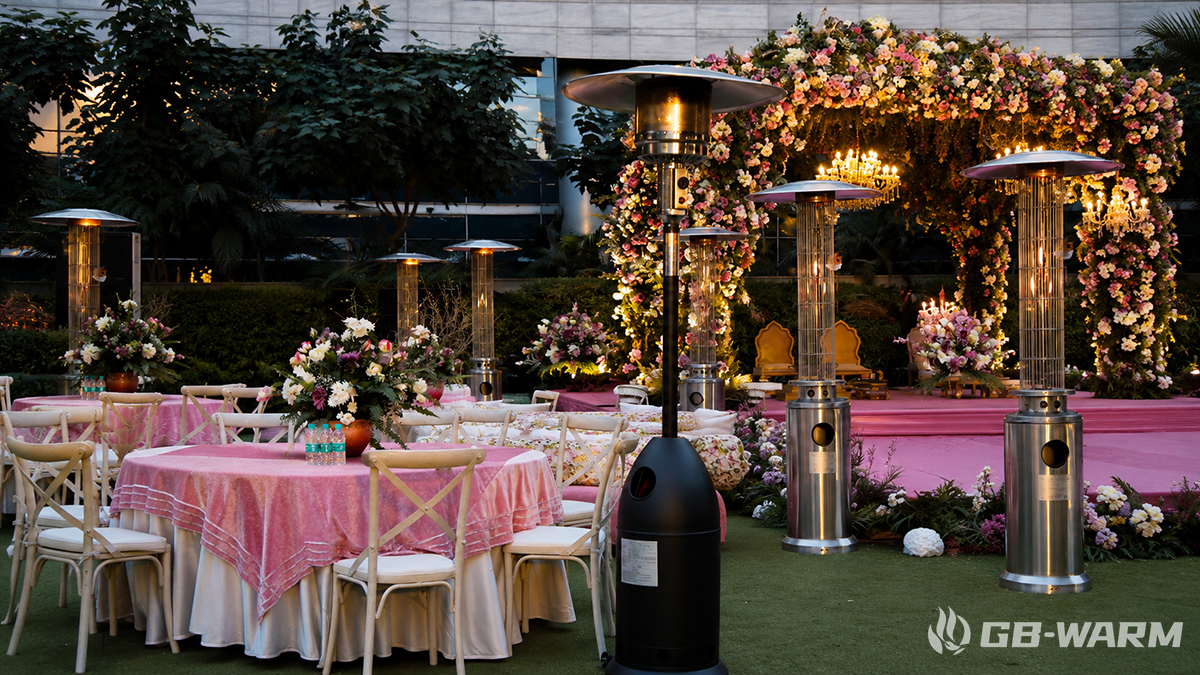
What Is a Commercial Patio Heater?
A commercial patio heater is designed for professional outdoor environments where continuous operation, higher performance, and durability are required.
Typical commercial applications include:
Unlike residential models, commercial patio heaters are built to handle frequent use, changing weather conditions, and longer operating hours.
For example, a restaurant may operate outdoor heating systems for 6–10 hours every evening during colder seasons. In this situation, the heater must provide stable heat output while maintaining safety and efficiency.
Commercial buyers usually focus on:
Heating coverage
Reliability
Fuel efficiency
Product lifespan
Safety certification
Easy maintenance
Brand reputation
What Is a Residential Patio Heater?
A residential patio heater is designed mainly for private homeowners who want to improve comfort in outdoor living spaces.
Common applications include:
Residential users typically operate heaters occasionally, such as during weekends, holidays, or family events.
Because usage frequency is lower, residential patio heaters are usually designed with:
Lower purchase cost
Simpler operation
Smaller heating coverage
Lightweight construction
For homeowners, appearance, convenience, and affordability are often the most important factors.
However, residential models may not be suitable for businesses that require daily operation.
Commercial vs Residential Patio Heaters: The 7 Key Differences
Difference 1: Heating Performance and Coverage Area
The biggest difference between commercial and residential patio heaters is heating performance.
Commercial patio heaters are designed to warm larger outdoor areas and maintain comfortable temperatures even in challenging weather conditions.
For example:
A restaurant terrace may require heating for 30–100 square meters depending on layout and climate conditions.
Commercial models usually provide:
Residential patio heaters, on the other hand, are typically designed for smaller spaces.
A homeowner may only need to heat:
A small patio
A dining table area
A backyard seating zone
Using residential heaters in commercial environments often results in insufficient warmth, requiring multiple units and increasing operating costs.
For businesses, investing in professional commercial patio heaters is usually more cost-effective in the long term.
Difference 2: Durability and Product Lifespan
Commercial environments are much more demanding than residential applications.
A restaurant heater may operate hundreds or even thousands of hours every year, while a residential heater may only be used occasionally.
Therefore, commercial patio heaters require:
Premium commercial heaters often use:
Stainless steel components
Weather-resistant finishes
Reinforced structures
Industrial-grade burners or combustion systems
Residential products may prioritize lower cost, which can result in shorter lifespan under heavy usage.
For importers and distributors, product durability directly affects:
Customer satisfaction
Warranty claims
Brand reputation
Repeat orders
Choosing a reliable patio heater manufacturer is essential for maintaining long-term business growth.
Difference 3: Fuel Efficiency and Operating Cost
Operating cost is one of the most important factors for commercial buyers.
Restaurants and hotels need to consider not only the purchase price but also the total cost of ownership.
A cheaper heater may become expensive if it consumes excessive fuel or requires frequent maintenance.
Commercial patio heaters are usually designed for better efficiency through:
For example, pellet patio heaters have gained popularity among commercial users because they offer:
Renewable biomass fuel options
Attractive flame effects
Lower fuel storage requirements
A unique customer experience
Compared with traditional gas heaters, pellet patio heaters can provide both functional heating and visual appeal, making them attractive for restaurants, outdoor dining spaces, and hospitality businesses.
Difference 4: Construction Quality and Materials
Commercial patio heaters need to withstand:
Rain
Wind
Temperature changes
Daily transportation
Frequent cleaning
Therefore, material selection becomes critical.
Professional commercial models often feature:
Stainless Steel Components
Stainless steel provides:
Corrosion resistance
Longer service life
Premium appearance
Stronger Frames
Commercial users need stable equipment that can remain safe in busy environments.
Better Surface Treatment
Outdoor products require protective coatings to prevent:
Rust
Color fading
Weather damage
For distributors importing patio heaters, construction quality is one of the most important factors when selecting suppliers.
A reliable manufacturer should provide consistent quality control and production standards.
Difference 5: Safety Standards and Commercial Requirements
Safety is another major difference between commercial patio heaters and residential patio heaters.
For homeowners, safety is important, but the usage environment is usually controlled. A family may use a patio heater for a few hours during a weekend gathering.
Commercial environments are different.
Restaurants, hotels, and outdoor venues often have:
More people around the heater
Longer operating hours
Frequent customer movement
Different weather conditions
Higher expectations for reliability
Therefore, commercial patio heaters require more attention to:
Stability
Flame control
Heat protection
Ventilation requirements
Structural safety
Professional buyers should always consider whether a patio heater manufacturer follows strict quality control procedures and provides products suitable for commercial applications.
For example, restaurant operators need heaters that can safely operate for extended periods without frequent shutdowns or maintenance issues. Proper placement, ventilation, and following manufacturer instructions are also critical factors for safe outdoor heating.
When choosing a commercial patio heater supplier, importers should evaluate:
A low-cost residential heater may appear attractive initially, but safety risks and maintenance problems can create higher costs for commercial users.
Difference 6: Design, Appearance and Customer Experience
Commercial patio heaters are not only heating equipment — they are also part of the customer experience.
For restaurants, hotels, and outdoor hospitality businesses, appearance matters.
A well-designed patio heater can create:
This is especially important for high-end restaurants and resorts where outdoor spaces are part of the brand image.
Commercial models often focus on:
Professional Appearance
Commercial buyers usually prefer designs that match:
Large Flame Visibility
Some outdoor businesses choose flame-based heating solutions because the visible flame creates:
This is one reason pellet patio heaters have become increasingly interesting for hospitality applications.
Unlike traditional heating equipment, pellet patio heaters combine:
For restaurants and outdoor venues, the heater becomes part of the environment rather than just a heating device.
Difference 7: Customization and OEM Capability
One of the biggest differences for importers and distributors is customization capability.
Residential patio heaters are usually sold as finished consumer products.
However, commercial buyers often need:
Custom colors
Private labels
Customized packaging
Different accessories
Product modifications
Exclusive designs
This is especially important for:
Working with an experienced patio heater manufacturer allows businesses to develop products that match their own market positioning.
A professional OEM patio heater supplier can support:
Private Label Production
Companies can build their own outdoor heating brand by adding:
Logo customization
Brand packaging
User manuals
Marketing materials
Product Development
Experienced manufacturers can help improve:
Product structure
Heating performance
Fuel system
User experience
Market Adaptation
Different regions have different requirements.
For example:
European buyers may focus on:
Environmental standards
Energy efficiency
Modern design
Hospitality businesses may focus on:
High heating capacity
Long operating time
Premium appearance
A flexible manufacturer can provide solutions based on different market needs.
Commercial Patio Heater vs Residential Patio Heater Comparison
| Feature | Commercial Patio Heater | Residential Patio Heater |
| Main Users | Restaurants, hotels, venues, distributors | Homeowners |
| Usage Frequency | Daily or heavy-duty use | Occasional use |
| Heating Coverage | Large outdoor areas | Small outdoor spaces |
| Durability | Designed for long-term operation | Designed for light use |
| Materials | Heavy-duty construction | Cost-focused materials |
| Fuel Efficiency | Optimized for operating cost | Basic efficiency |
| Customization | OEM/private label available | Usually limited |
| Maintenance | Designed for easier servicing | Basic maintenance |
| Investment Goal | Business return and reliability | Personal comfort |
Which Patio Heater Should Restaurants Choose?
For restaurants, cafes, and hotels, commercial patio heaters are usually the better choice.
Outdoor dining has become an important revenue opportunity for many hospitality businesses. Extending patio availability during colder months allows restaurants to:
Increase seating capacity
Improve customer experience
Create additional revenue opportunities
A commercial patio heater should provide:
1. Strong Heating Performance
Customers should feel comfortable even during colder evenings.
2. Reliable Long-Term Operation
Restaurants cannot afford frequent equipment failures during business hours.
3. Attractive Design
Outdoor heating equipment should enhance the atmosphere.
4. Reasonable Operating Cost
Energy efficiency directly affects business profitability.
For hospitality applications, choosing professional-grade heating equipment is an investment rather than simply a purchase.
How Importers Choose a Reliable Patio Heater Manufacturer
For wholesalers and distributors, selecting the right manufacturer is more important than selecting a single product.
A reliable patio heater supplier should provide:
1. Manufacturing Experience
Experienced manufacturers understand:
2. Stable Production Capability
Importers need suppliers who can support:
Large orders
Consistent quality
On-time delivery
3. OEM and Custom Manufacturing Services
A strong manufacturing partner should help customers develop products for their own markets.
4. Quality Control System
Before shipping, professional manufacturers should check:
Product appearance
Heating performance
Safety functions
Packaging quality
5. Export Experience
International buyers should work with suppliers familiar with:
Choosing the right manufacturer reduces risks and creates long-term business opportunities.
GB-WARM specializes in manufacturing innovative pellet patio heaters for global markets.
With years of production and export experience, GB-WARM focuses on providing reliable outdoor heating solutions for:
Distributors
Importers
Restaurant suppliers
Outdoor living brands
Our advantages include:
Professional Pellet Patio Heater Manufacturing
We focus on developing heating products that combine:
OEM & Custom Solutions
We support global partners with:
Customized designs
Branding solutions
Product improvements
Flexible manufacturing
Experience in International Markets
Our products are supplied to customers across multiple countries, helping partners expand their outdoor heating business.
For buyers looking for a reliable commercial patio heater manufacturer, choosing an experienced factory partner can make a significant difference.
Final Conclusion: Commercial or Residential Patio Heater — Which One Is Better?
The answer depends on your application.
For homeowners who occasionally enjoy outdoor spaces, a residential patio heater may be sufficient.
However, for restaurants, hotels, commercial projects, and distributors, commercial patio heaters provide better:
Performance
Durability
Safety
Cost efficiency
Long-term value
Before purchasing, buyers should carefully evaluate their usage requirements, operating environment, and future business goals.
Choosing the right patio heater is not only about producing heat — it is about creating comfortable outdoor spaces and building long-term value.
For businesses looking for reliable wholesale patio heaters or OEM outdoor heating solutions, partnering with an experienced patio heater manufacturer is the key to success.
Frequently Asked Questions (FAQ)
1. Can residential patio heaters be used in restaurants?
Technically, some residential models can provide heat outdoors, but they are generally not designed for heavy commercial use. Restaurants usually require stronger, more durable commercial patio heaters.
2. Are commercial patio heaters more expensive?
Yes, commercial models usually have a higher initial cost because they use stronger materials, better components, and are designed for longer operating hours.
However, their longer lifespan and better performance often provide better long-term value.
3. What type of patio heater is best for restaurants?
The best choice depends on the restaurant environment, but many businesses choose commercial gas heaters, electric heaters, or pellet patio heaters based on heating requirements, design preferences, and operating costs.
4. Why are pellet patio heaters becoming popular?
Pellet patio heaters offer a combination of:
They are especially attractive for restaurants and hospitality businesses.
5. How can I find a reliable patio heater manufacturer?
Look for manufacturers with:
A reliable supplier can help your business grow through consistent product quality and support.

 Español
 English
 العربية
 Français
 Русский
 Português
 Deutsch
 italiano
 Nederlands
 Polski
 Türkçe
 日本語
日本語 한국어
한국어 ဗမာစာ
ဗမာစာ தமிழ்
தமிழ் Bahasa Indonesia
 Čeština
 қазақ
қазақ Српски
 فارسی
فارسی Slovenčina
 Slovenščina
 Norsk
Norsk Svenska
 Ελληνικά
 Suomi
Suomi Latine
 Dansk
Dansk Shqip
Shqip বাংলা
বাংলা Hrvatski
 Gaeilge
 Eesti keel
 සිංහල
සිංහල नेपाली
 Oʻzbekcha
 latviešu
 Български
 ქართული
 ગુજરાતી
 íslenska
 ಕನ್ನಡ
ಕನ್ನಡ Lietuvių
 Lëtzebuergesch
 മലയാളം
 Malti
Malti मराठी
मराठी ଓଡ଼ିଆ
ଓଡ଼ିଆ پښتو
پښتو ਪੰਜਾਬੀ
 తెలుగు
 isiZulu


![Outdoor Glass Tube Patio Heater - [Propane], [11KW], for Backyard, Garden & Commercial Use - CZGB-D1-11KW | GB-WARM](http://iororwxhjlkmlq5p.ldycdn.com/cloud/plBpoKqklpSRqlinijqnip/zhutu-640-640.png)